Anonymous, Private, or Temporary Email?
Anonymous, Private, or Temporary Email
If you've spent any time researching online privacy, you've probably come across terms like anonymous email, private email, and temporary email. At first glance, they seem to mean the same thing. After all, they're all connected to protecting your privacy online, right?
Not exactly.
One of the biggest misconceptions in the privacy world is that these terms are interchangeable. They're not. In fact, anonymous, private, and temporary email addresses serve different purposes, solve different problems, and offer different levels of protection.
This confusion is understandable. Most people aren't privacy experts. They simply want to reduce spam, protect their personal information, or avoid exposing their primary email address to every website they visit. When faced with dozens of privacy tools and email services, it can be difficult to know which option is actually appropriate for a particular situation.
The reality is that choosing the wrong type of email can sometimes create unrealistic expectations. Someone might use a temporary email believing they're completely anonymous, only to discover that anonymity involves much more than an email address. Others might pay for a private email service expecting it to eliminate spam entirely, only to realize that privacy and spam prevention are different goals.
Understanding these distinctions can help you make smarter decisions about your online identity and privacy strategy.
In this guide, we'll break down exactly what anonymous, private, and temporary emails are, how they differ, and when each one makes the most sense.
Why Email Privacy Matters More Than Ever
Before comparing these three types of email, it's worth understanding why email privacy has become such a common concern.
For many people, an email address is no longer just a communication tool. It's a digital identifier.
Think about how many services are connected to your email account. Social media platforms, online stores, banking apps, streaming services, work accounts, travel websites, newsletters, and mobile applications all rely on email addresses for registration and communication.
Over time, a single email address can become linked to hundreds of online interactions.
That creates convenience, but it also creates exposure.
Every website you join potentially stores your information. Every account you create expands your digital footprint. If a company experiences a data breach, your email address may become part of the leaked information. Marketing databases, advertising systems, and customer profiles often use email addresses as a way to identify users across different interactions.
As privacy awareness grows, people are looking for ways to reduce unnecessary exposure. That's where anonymous, private, and temporary email solutions enter the conversation.
Although they share some similarities, each serves a distinct purpose.
What Is an Anonymous Email?
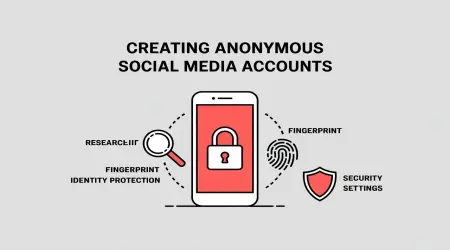
An anonymous email is designed to minimize the connection between your real-world identity and your email account.
The primary goal is anonymity.
When creating an anonymous email account, users typically avoid providing personal information such as their real name, phone number, home address, or other identifying details. Some people also use additional privacy tools to further reduce the information associated with the account.
The key idea is simple: if someone sees the email address, it should be difficult to connect it directly to the person behind it.
However, anonymity is often misunderstood.
Many people assume that creating a random email address automatically makes them anonymous. In reality, anonymity depends on far more than the email itself. Information such as IP addresses, browser fingerprints, login behavior, and account activity can still reveal clues about a user's identity.
Anonymous email accounts are commonly used for:
- Protecting personal identity
- Sensitive communications
- Privacy-focused online activities
- Separating personal identity from specific projects
- Reducing direct identification online
It's important to understand that anonymous does not necessarily mean untraceable. Rather, it means reducing the amount of personally identifiable information connected to the account.
Think of anonymous email as focusing on identity protection.
What Is a Private Email?
Private email has a different objective.
While anonymous email focuses on hiding identity, private email focuses on protecting communication and personal information.
A private email service typically emphasizes features such as stronger security, enhanced privacy policies, encryption, reduced tracking, and greater control over user data.
The goal is not necessarily anonymity.
For example, many people use private email services with their real names. The difference is that these services often place a stronger emphasis on safeguarding user information and limiting how data is collected, analyzed, or shared.
Private email solutions are commonly chosen by people who want:
- Better protection for personal communications
- Reduced tracking
- Stronger security practices
- Greater control over data
- Enhanced privacy compared to mainstream services
Imagine sending a letter.
Anonymous email focuses on hiding who sent the letter. Private email focuses on protecting the contents of the letter and limiting who can access it.
Those are related goals, but they're not the same thing.
Someone can use a private email service without being anonymous. Likewise, someone can attempt to remain anonymous while using an email service that offers limited privacy protections.
The two concepts often overlap, but they address different concerns.
What Is a Temporary Email?
Temporary email addresses serve a completely different purpose.
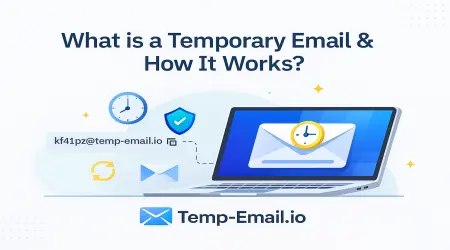
A temporary email is designed for short-term use.
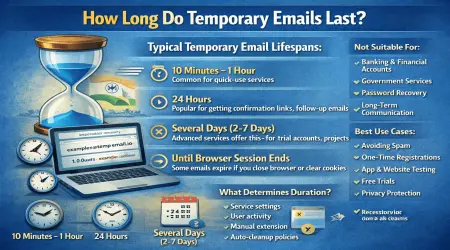
Instead of creating a permanent account, users generate an email address that exists for a limited period of time. Once the purpose has been served, the address eventually expires or is discarded.
The primary goal is convenience and exposure reduction.
Let's say you want to download a free guide, access a webinar, test a new application, or sign up for a service you're unsure about. You need an email address to receive a confirmation message, but you don't necessarily want to share your personal inbox.
This is where temporary email becomes useful.
Common uses include:
- One-time registrations
- Trial accounts
- Downloading resources
- Accessing temporary services
- Reducing marketing emails
- Limiting inbox clutter
Unlike anonymous email, temporary email isn't primarily about hiding identity.
Unlike private email, temporary email isn't primarily about secure communication.
Instead, temporary email focuses on reducing unnecessary exposure by limiting how often your primary email address is shared.
Many privacy-conscious users view temporary email addresses as a practical tool for managing their digital footprint.
Comparing Anonymous, Private, and Temporary Email
The easiest way to understand these concepts is to focus on their core purpose.
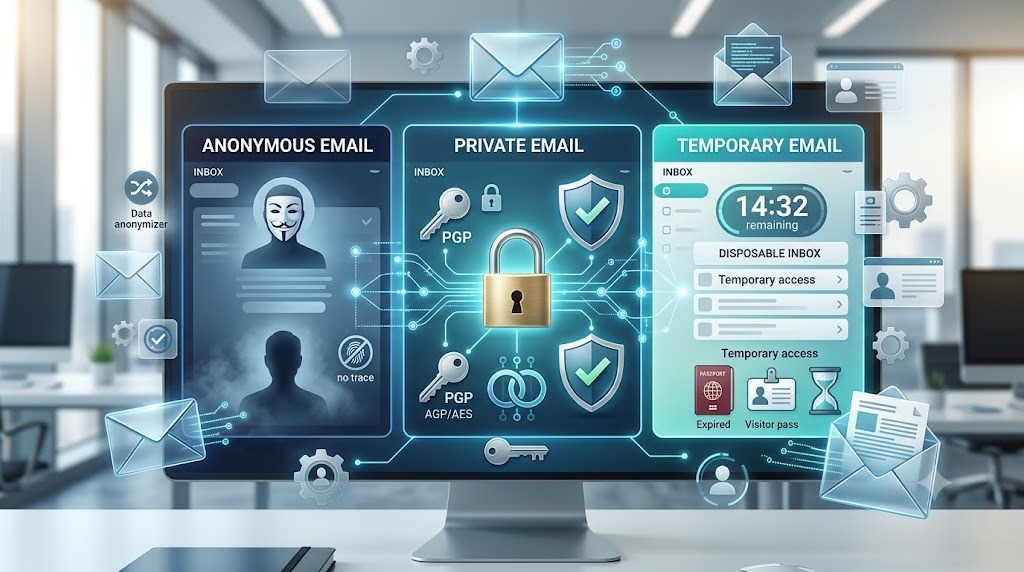
Anonymous email protects identity.
Private email protects information and communication.
Temporary email protects your primary inbox from unnecessary exposure.
Imagine you're attending a conference.
An anonymous email is like wearing a name badge that doesn't reveal who you really are.
A private email is like having a secure conversation in a private room.
A temporary email is like using a visitor pass that expires when you leave.
Each serves a different function.
This distinction matters because people often expect one solution to solve every privacy problem.
For example, using a temporary email won't automatically make someone anonymous. Similarly, a private email service doesn't eliminate the need for good privacy habits. Anonymous email alone doesn't prevent spam or manage long-term subscriptions effectively.
Understanding these differences helps users choose the right tool for the right situation.
Which Type of Email Should You Use?
The answer depends entirely on your goals.
If your primary concern is protecting the content of your communications and limiting how your data is handled, a private email service may be the best choice.
If your goal is reducing the connection between your identity and a particular online activity, anonymous email practices may be more relevant.
If you're simply trying to avoid spam, protect your main inbox, or register for a service without sharing your permanent email address, temporary email may be the most practical option.
In reality, many privacy-conscious individuals use all three approaches in different situations.
For example:
- A private email account for important personal communication
- A regular email account for everyday use
- Temporary email addresses for one-time registrations
- Anonymous accounts for specific privacy-focused activities
This layered approach often provides the best balance between convenience, privacy, and usability.
Privacy isn't usually about finding a single perfect solution. It's about using the right tools in the right contexts.
Building a Smarter Email Privacy Strategy
One of the most effective ways to improve online privacy is to stop thinking of email as a single tool.
Most people use one email address for everything. Banking, shopping, social media, newsletters, online forums, and mobile apps all become connected to the same account.
Over time, this creates a large and highly visible digital footprint.
A smarter approach is to separate different aspects of your online life.
For example, you might use:
- A primary email for important accounts
- A private email service for sensitive communications
- Temporary emails for low-risk registrations
- Additional accounts for subscriptions and newsletters
This strategy reduces risk while giving you more control over how your information is shared.
The goal isn't paranoia.
The goal is intentionality.
Every email address you share becomes part of your digital identity. By choosing the appropriate type of email for each situation, you gain greater control over your privacy without sacrificing convenience.
Conclusion
Although anonymous, private, and temporary email addresses are often discussed together, they solve different problems.
Anonymous email focuses on reducing the connection between an email account and your real identity. Private email focuses on protecting your communications and personal information. Temporary email focuses on limiting exposure by providing short-term email addresses for one-time use.
Understanding these distinctions can help you make better decisions online.
No single email solution provides complete privacy, anonymity, or protection. However, by understanding the strengths and limitations of each option, you can build an email strategy that matches your needs and helps you maintain greater control over your digital footprint.
As privacy concerns continue to grow, the people who understand their tools will be in the strongest position to protect themselves online.
Which type of email do you use most often? Share your thoughts in the comments and let us know how you manage your online privacy.