Are Temporary Email Addresses Safe to Use?
If you've spent any time online, you've probably encountered a situation where a website asks for your email address before granting access to something you want.
Maybe it was a free ebook, a software trial, a webinar registration, a discount code, or access to a discussion forum. In many cases, providing an email address feels like a small price to pay. After all, it's just an email address, right?
Not necessarily.
Over time, your email address becomes one of the most valuable pieces of your digital identity. It's connected to your online accounts, subscriptions, shopping history, password recovery processes, and countless other aspects of your online life. Every time you share it, you expand your digital footprint a little further.
This is one reason temporary email addresses have become increasingly popular. They offer a quick and convenient way to receive verification emails and complete registrations without exposing your primary inbox.
But this raises an important question: Are temporary email addresses actually safe to use?
The short answer is yes—in many situations, temporary email addresses can be a useful privacy tool. However, like any online tool, they come with limitations and potential risks that users should understand before relying on them.
The key isn't simply knowing that temporary emails exist. It's understanding when they make sense, when they don't, and how to use them responsibly.
Let's take a closer look at the safety of temporary email addresses and what every internet user should know before using them.
What Is a Temporary Email Address?
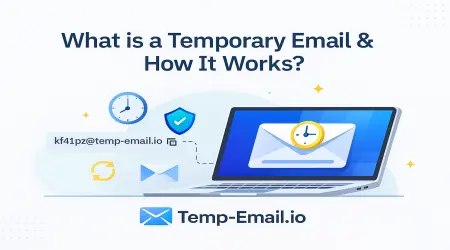
A temporary email address is an email account designed for short-term use.
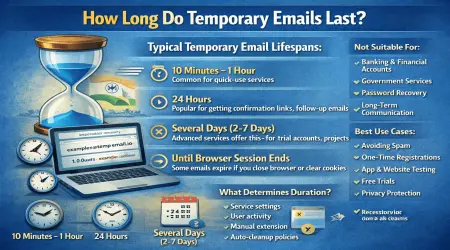
Unlike a traditional email account that you may keep for years, a temporary email address is often created instantly and exists only for a limited period. Some expire after a few minutes, while others remain active for several hours or days.
Their primary purpose is simple: receive emails without requiring users to share their permanent email address.
For example, imagine you want to download a free guide from a website you've never visited before. Rather than providing your primary email, you use a temporary email address. The verification email arrives, you access the content, and the temporary address eventually expires.
This approach helps reduce spam, protect privacy, and limit unnecessary exposure of personal information.
For casual online interactions, temporary emails can be surprisingly useful.
However, understanding how they work is essential for evaluating their safety.
Why Many People Consider Temporary Emails Safe
One of the biggest reasons people use temporary email addresses is because they create separation.
Instead of connecting every online service directly to your primary inbox, you create a buffer between yourself and unfamiliar websites.
This separation offers several privacy benefits.
First, it reduces spam.
Many websites collect email addresses for marketing purposes. Even legitimate companies often send newsletters, promotions, product announcements, and reminders. Over time, these messages can clutter your inbox.
Using a temporary email prevents these communications from reaching your primary account.
Second, temporary emails can reduce exposure during data breaches.
If a website experiences a security incident, the compromised email address may be a temporary one rather than your primary address. While this doesn't prevent the breach itself, it limits the connection between the exposed data and your long-term digital identity.
Third, temporary emails allow users to test services with less commitment.
Perhaps you're evaluating a new app, joining a temporary community, or exploring a website you're not entirely sure you'll use again. In these situations, sharing a disposable email address often feels more reasonable than providing your permanent one.
From a privacy perspective, these advantages make temporary email addresses a valuable tool for many internet users.
The Risks You Should Understand
Despite their benefits, temporary email addresses are not completely risk-free.
One of the most important considerations is the provider itself.
Not all temporary email services operate in the same way. Some offer stronger privacy protections than others. Certain services may store emails temporarily, while others may display messages in publicly accessible inboxes.
This means users should be cautious when receiving sensitive information through temporary email addresses.
For example, receiving account verification emails is usually low risk. Receiving confidential personal information is a different matter entirely.
Another challenge involves account recovery.
Many websites use email addresses as a way to reset passwords and verify account ownership. If your temporary email expires and you later need to recover the account, you may find yourself locked out permanently.
This is one of the most common drawbacks of temporary email usage.
Users sometimes sign up for a service expecting to use it briefly, only to discover months later that they want continued access. By that point, the temporary email address may no longer exist.
Safety isn't only about privacy—it also involves maintaining access when you need it.
When Temporary Emails Are a Good Choice
Temporary email addresses work best in specific situations.
Generally speaking, they are ideal for low-risk, short-term activities where long-term communication is unlikely to be necessary.
Common examples include:
- Downloading free resources
- Accessing trial versions of software
- Testing new websites or apps
- Registering for one-time events
- Viewing gated content
- Joining temporary discussions
- Exploring unfamiliar online services
In these scenarios, the primary goal is often verification rather than ongoing communication.
A temporary email address allows users to complete the necessary steps while maintaining a higher level of privacy.
Think of it as borrowing a visitor badge instead of handing over your permanent ID card.
The interaction remains possible, but the connection is limited.
For many everyday internet activities, this approach strikes a practical balance between convenience and privacy.
When Temporary Emails Are Not a Good Idea
While temporary emails can be useful, there are situations where using one is simply not worth the risk.
Any account that plays an important role in your personal, professional, or financial life should generally be connected to a permanent email address that you control.
Examples include:
- Online banking accounts
- Healthcare portals
- Government services
- Work-related accounts
- Educational platforms
- Primary shopping accounts
- Subscription services you plan to keep
- Cloud storage accounts
These services often require ongoing communication, security notifications, password recovery options, and account verification processes.
Losing access to these accounts could create significant problems.
In such cases, the convenience of a temporary email is outweighed by the need for reliability and long-term accessibility.
A useful rule of thumb is simple: if the account matters, use a permanent email address.
How to Use Temporary Emails Safely
The safest approach to temporary email addresses involves understanding their purpose and limitations.
Users can improve safety by following a few practical habits.
First, avoid using temporary emails for accounts containing sensitive personal information.
Second, use temporary emails primarily for testing, exploration, and short-term interactions.
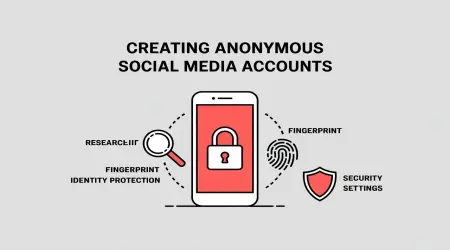
Third, remember that temporary emails protect your primary inbox but do not make you anonymous online. Websites may still collect information through cookies, browser data, IP addresses, and other tracking methods.
Fourth, consider whether you might need future access before registering. If long-term use is possible, a permanent email address may be the better choice.
Finally, choose reputable temporary email services rather than relying on unknown providers with unclear privacy practices.
Like most privacy tools, temporary emails work best when used thoughtfully rather than indiscriminately.
The Bigger Picture: Privacy Is About Layers
One common misconception is that a single tool can completely solve online privacy concerns.
In reality, privacy works best as a layered strategy.
Temporary email addresses represent one layer.
Strong passwords are another.
Two-factor authentication adds another.
Careful sharing of personal information contributes as well.
Each tool addresses a different aspect of online security and privacy.
Temporary emails help reduce exposure and inbox clutter, but they are not a substitute for responsible online behavior. They should be viewed as one piece of a broader approach to protecting personal information.
When combined with good digital habits, they can significantly improve privacy without making online life more complicated.
Conclusion
So, are temporary email addresses safe to use?
For many situations, yes.
They offer a practical way to reduce spam, limit exposure to unfamiliar services, and create separation between your primary email account and short-term online interactions. Used correctly, they can be a valuable privacy tool that helps users maintain greater control over their digital footprint.
However, temporary emails are not suitable for every situation. They come with limitations related to account recovery, long-term access, and the handling of sensitive information. Understanding these trade-offs is essential for using them effectively.
The safest approach is to view temporary email addresses as a specialized tool rather than a universal solution. They are excellent for testing services, accessing one-time content, and exploring unfamiliar platforms. For important accounts, a permanent and well-protected email address remains the better choice.
Ultimately, online privacy is often about making thoughtful decisions. Temporary email addresses can support those decisions when used wisely and in the right context.
Have you ever used a temporary email address? Share your experience in the comments and let us know whether it helped improve your privacy, reduce spa