Are Temporary Emails Legal? What You Need to Know
Have you ever signed up for a website and immediately regretted giving away your personal email address? Maybe your inbox was flooded with promotional emails within days. Or perhaps you wanted to download a free guide, test a service, or access a one-time offer without committing your primary email account.
If that sounds familiar, you've probably come across temporary email services.
Temporary emails, also known as disposable emails, have become increasingly popular in recent years. They offer a quick and convenient way to receive emails without exposing your personal inbox to spam, marketing messages, or potential privacy concerns. But as these services become more common, many people start asking an important question: Are temporary emails legal?
The short answer is yes—using a temporary email address is generally legal in most countries. However, as with many tools on the internet, legality often depends on how the tool is used. A temporary email account can be a perfectly legitimate privacy solution, or it can be misused for activities that violate terms of service, contracts, or even laws.
Understanding the difference is important, especially for everyday internet users who simply want to protect their privacy while staying on the right side of the law.
In this article, we'll explore what temporary emails are, how they work, whether they're legal, situations where they can be used responsibly, and the potential risks you should know before relying on them. By the end, you'll have a clear understanding of when using a temporary email is perfectly acceptable and when it could create problems.
What Is a Temporary Email?
Before discussing legality, it's helpful to understand exactly what a temporary email is.
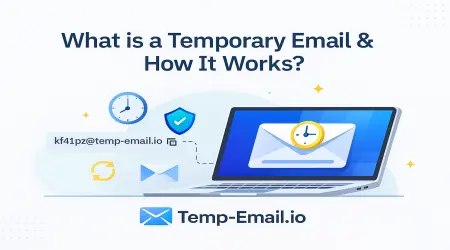
A temporary email address is an email account that exists for a short period of time. Unlike traditional email providers such as Gmail or Outlook, temporary email services often allow users to generate an email address instantly without registration.
The main purpose is convenience and privacy.
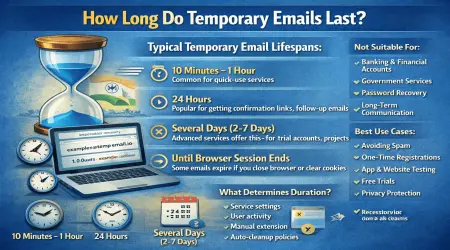
Instead of sharing your personal email address with every website you visit, you can use a temporary address to receive verification codes, confirmation emails, or one-time messages. Once you've finished using it, the email address may expire automatically or become inactive after a certain period.
Think of it like using a temporary phone number when selling an item online. You're still communicating, but you're protecting your primary contact information.
People commonly use temporary emails for:
- Testing websites and applications
- Downloading free resources
- Signing up for newsletters they're unsure about
- Avoiding spam emails
- Protecting personal privacy
- Creating trial accounts for software evaluation
In many cases, these uses are completely reasonable and often encouraged by privacy-conscious internet users.
Are Temporary Emails Legal?
The simple answer is that temporary emails are generally legal.
There is no law in most jurisdictions that prohibits individuals from using a disposable email address. Creating an email account—whether permanent or temporary—is not inherently illegal. Privacy is considered an important right in many countries, and tools that help protect personal information are typically lawful.
However, legality depends heavily on intent and usage.
A useful comparison would be a kitchen knife. Owning a knife is legal. Using it to prepare food is normal. Using it for criminal activity is illegal. The same principle applies to temporary email services.
When used for legitimate purposes, temporary emails are usually legal. Examples include:
- Protecting personal privacy
- Preventing spam
- Testing software
- Registering for free online resources
- Separating personal and professional activities
- Reducing exposure to data collection
Millions of internet users employ disposable email addresses for these reasons every year without any legal issues.
The challenge arises when temporary emails are used to deceive, defraud, bypass restrictions, or violate agreements.
In those situations, the problem isn't the temporary email itself—it's the activity being conducted through it.
When Using a Temporary Email Can Become Problematic
While temporary email services are generally lawful, there are situations where their use can lead to complications.
One common issue involves violating a website's terms of service. Many platforms specifically prohibit disposable email addresses. If you use one despite those rules, you may not be breaking the law, but you could be violating a contractual agreement between you and the platform.
For example, some websites provide free trials with the expectation that users create only one account. A person might repeatedly generate temporary email addresses to create multiple trial accounts and avoid paying for the service.
At first glance, this may seem harmless. However, it can violate the provider's terms and potentially create legal concerns if it involves intentional deception or financial loss.
Another example involves online voting systems, contests, or promotional campaigns. If someone uses dozens of temporary email addresses to manipulate results or gain unfair advantages, the issue extends beyond privacy protection and enters the territory of fraud or abuse.
Temporary emails can also become problematic when used to conceal identity during unlawful activities, including:
- Phishing attempts
- Online scams
- Identity fraud
- Harassment
- Unauthorized access to systems
- Circumventing legal restrictions
In these cases, law enforcement focuses on the underlying conduct rather than the temporary email service itself.
It's similar to using a rental car during the commission of a crime. The rental vehicle isn't illegal, but the actions taken with it may be.
Why Many People Use Temporary Emails for Legitimate Reasons
The growing popularity of temporary email services isn't surprising when you consider today's digital environment.
Most people have experienced email overload at some point. You sign up for one service, and suddenly dozens of marketing emails arrive every week. Sometimes your information gets shared with third parties, resulting in even more unwanted messages.
Temporary emails offer a practical solution.
Imagine you're interested in downloading a free eBook. The website requires an email address before granting access. You aren't sure whether you'll ever return to the site, and you don't want months of promotional emails filling your inbox.
Using a temporary email in that scenario can help maintain privacy while still allowing you to access the content.
Many cybersecurity professionals also recommend limiting the exposure of your primary email address whenever possible. Every additional website that stores your email creates another potential point of vulnerability in the event of a data breach.
A disposable email can act as a buffer between you and unknown websites.
For individuals concerned about privacy, temporary emails may provide benefits such as:
- Reduced spam
- Lower exposure to data breaches
- Better control over personal information
- Easier testing of online services
- Increased separation between personal activities and public registrations
These advantages explain why disposable email services continue to attract users worldwide.
Do Businesses and Websites Allow Temporary Emails?
This is where things become interesting.
Even though temporary emails are generally legal, not every business welcomes them.
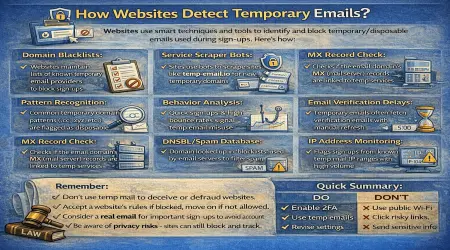
Many websites actively block known disposable email domains during registration. If you've ever tried creating an account and received a message saying your email address isn't accepted, this may be the reason.
Businesses often have legitimate concerns.
They may rely on email addresses to:
- Verify real users
- Prevent spam accounts
- Reduce fraudulent registrations
- Maintain customer relationships
- Protect free trial programs from abuse
From a business perspective, temporary emails can make it difficult to distinguish genuine customers from users attempting to exploit the platform.
Consider a streaming service offering a seven-day free trial. If users continually create new temporary email addresses to access endless free trials, the business loses revenue and undermines the purpose of the offer.
As a result, many companies maintain databases of disposable email providers and automatically reject registrations from those domains.
This doesn't mean using temporary emails is illegal. It simply means certain organizations choose not to support them.
Users should always review a website's terms and conditions before registering if they have concerns about compliance.
Best Practices for Using Temporary Emails Responsibly
If you decide to use temporary email services, responsible usage can help you avoid unnecessary issues.
The first rule is simple: use temporary emails for privacy, not deception.
There's a significant difference between protecting your inbox and intentionally misleading a service provider.
For example, using a disposable email to sign up for a newsletter is generally harmless. Using dozens of disposable emails to manipulate a referral program is a different story.
A few practical guidelines can help:
Respect Website Policies
If a website explicitly prohibits disposable email addresses, understand that your account could be suspended or restricted if you proceed.
Avoid Fraudulent Activities
Never use temporary emails to impersonate others, evade payments, commit fraud, or engage in unlawful behavior.
Protect Important Accounts
Temporary emails should not be used for critical services such as banking, healthcare portals, tax accounts, or long-term business communications.
Because these email addresses often expire, you could lose access to important information or account recovery options.
Use Them for Low-Risk Registrations
Temporary emails work best for:
- One-time downloads
- Software testing
- Trial evaluations
- Newsletter signups
- Accessing free resources
Understand the Privacy Limitations
Some users mistakenly believe temporary emails provide complete anonymity.
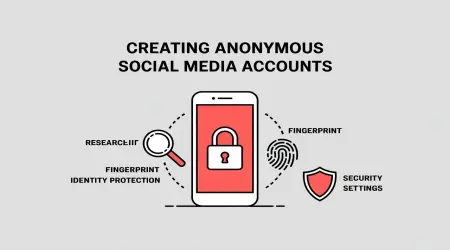
In reality, websites can still collect information such as IP addresses, browser details, device fingerprints, and other identifying data. A temporary email enhances privacy but does not make someone invisible online.
Using these services with realistic expectations is important.
The Future of Temporary Emails and Online Privacy
The discussion around temporary emails is part of a much larger conversation about online privacy.
People are becoming increasingly aware of how much personal data is collected during everyday internet activity. Email addresses often serve as digital identifiers, connecting users to marketing databases, advertising networks, and customer profiles.
As privacy concerns continue to grow, temporary email services will likely remain popular.
At the same time, businesses are investing in more sophisticated verification systems. Some companies now rely on phone verification, multifactor authentication, identity verification tools, and advanced fraud detection technologies to reduce abuse.
This creates an ongoing balance between user privacy and business security.
Most experts agree that privacy-focused tools are valuable when used responsibly. Temporary emails provide one way for users to maintain greater control over their personal information without necessarily revealing their primary contact details to every website they encounter.
The key is remembering that privacy tools are most effective when paired with ethical and lawful behavior.
Conclusion
So, are temporary emails legal?
In most cases, yes. Temporary email services are generally legal and widely used by individuals who want to protect their privacy, reduce spam, and limit exposure to unwanted marketing communications. Simply using a disposable email address is not a crime.
However, legality isn't the only consideration. The way you use a temporary email matters. When used responsibly for privacy and convenience, temporary emails can be a valuable tool. When used to deceive, manipulate systems, commit fraud, or violate platform rules, they can create serious problems.
The safest approach is to view temporary emails as a privacy tool rather than a loophole. Use them to protect your information, not to avoid legitimate obligations or misuse online services.
As the internet continues to evolve, privacy-conscious practices will become increasingly important. Temporary emails are just one piece of that puzzle, helping users maintain more control over their digital footprint while navigating the online world safely and responsibly.
What are your thoughts on temporary emails? Have you ever used one to avoid spam or protect your privacy online? Share your experiences in the comments, and feel free to share this article with others who are curious about the legality of disposable email services.