Can Disposable Emails Reduce Scam Exposure?
Can Disposable Emails Reduce Scam Exposure?
Almost everyone has received one.
A suspicious email claiming you've won a prize you never entered. A message pretending to be from your bank asking you to verify your account. An urgent notification warning that your package cannot be delivered unless you click a link immediately.
Online scams have become so common that many people barely notice them anymore. Yet despite growing awareness, scammers continue to find new ways to reach potential victims every day. One of their favorite tools is something most of us use constantly: email.
The average internet user shares their email address with dozens, if not hundreds, of websites over the years. Online stores, newsletters, mobile apps, free trials, discussion forums, streaming services, and digital downloads all ask for an email address. Every time you provide it, your digital footprint grows a little larger.
Over time, that single email address can end up in countless databases. Some companies protect user information responsibly. Others may suffer data breaches, sell customer data to third parties, or fail to maintain strong security practices. Once an email address starts circulating widely, it often becomes a target for spam, phishing attempts, and other scams.
This reality has led many privacy-conscious users to adopt disposable email addresses as part of their online habits. But can disposable emails actually reduce scam exposure, or is that just another privacy myth?
The answer is nuanced. Disposable emails won't eliminate online scams entirely, but they can significantly reduce your exposure to certain types of threats when used correctly.
Let's take a closer look at how they work, where they help, and where their limitations begin.
Understanding How Scammers Get Your Email Address
Before exploring solutions, it's useful to understand the problem.
Most scam emails don't appear out of nowhere.
In many cases, scammers obtain email addresses through one of several common channels. Data breaches are among the biggest sources. When a company experiences a security incident, customer information may be exposed, including email addresses.
Sometimes email addresses are collected through less dramatic means. Marketing databases may be shared, sold, or transferred between companies. Public online profiles can expose contact information. Some websites gather user data with minimal transparency, increasing the chances that personal information spreads beyond its original purpose.
There are also automated systems that scan websites, forums, and public pages looking for email addresses.
Once scammers obtain an address, they often add it to large distribution lists used for phishing campaigns, fake promotions, fraudulent investment schemes, and other scams.
The more places your primary email address appears, the more opportunities exist for it to reach the wrong hands.
This is one reason why privacy experts frequently encourage users to limit unnecessary exposure whenever possible.
What Are Disposable Emails and Why Do People Use Them?
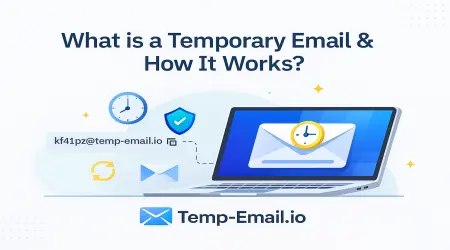
A disposable email address is a temporary email account designed for short-term use.
Instead of providing your primary email address to every website, you generate a temporary address that can receive emails for a limited period of time. After you've completed the signup process or received the information you need, the address can be discarded.
Think of it as using a temporary visitor badge instead of handing out a permanent key to your home.
People commonly use disposable emails for:
- Downloading free resources
- Testing online services
- Signing up for trial accounts
- Accessing one-time promotions
- Registering for websites they may never visit again
- Reducing marketing emails
The goal isn't secrecy. The goal is limiting exposure.
Rather than allowing dozens of unknown websites to store your personal email address indefinitely, disposable emails create a buffer between your primary inbox and the broader internet.
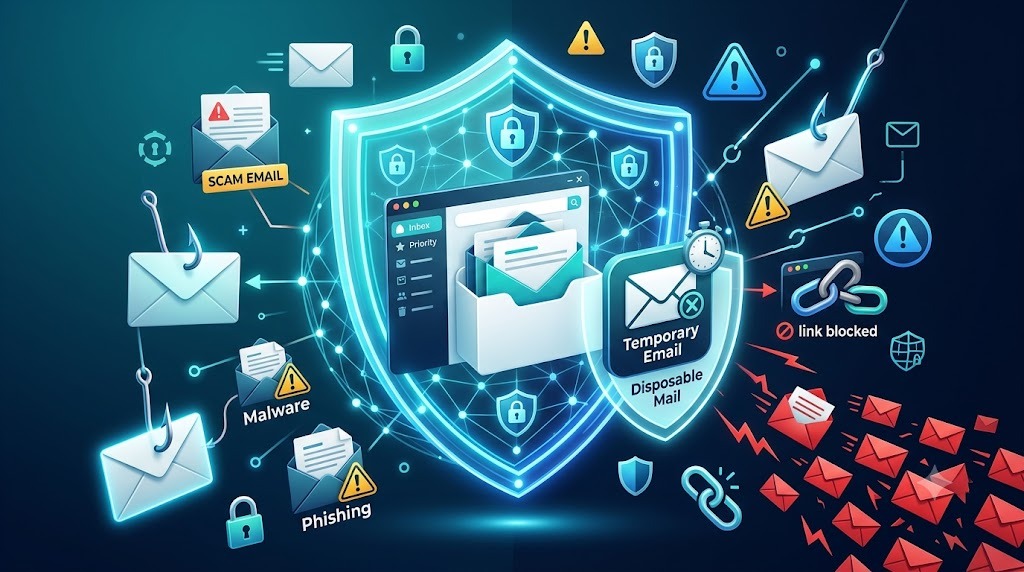
That separation can play an important role in reducing scam exposure.
How Disposable Emails Can Reduce Scam Exposure
The biggest advantage of disposable email addresses is simple: they reduce the number of places where your real email address exists.
Every time you avoid sharing your primary email, you remove another potential entry point for future spam and scam attempts.
Imagine two internet users.
The first person uses the same email address for everything. Online shopping, newsletters, forums, contests, free downloads, and mobile apps all connect to a single inbox.
The second person reserves their primary email for important accounts and uses disposable emails for low-risk registrations.
After several years, the difference can be substantial.
The first user's email address may exist in hundreds of databases. The second user's primary address appears in far fewer locations.
When breaches occur or marketing databases circulate, the first user faces greater exposure.
Disposable emails help by limiting long-term visibility.
If a temporary address begins receiving spam or suspicious messages, it can simply be abandoned. The user's primary inbox remains unaffected.
This approach doesn't prevent scammers from targeting the temporary address itself, but it helps contain the problem before it reaches more valuable accounts.
Disposable Emails and Phishing Attempts
Phishing remains one of the most common online threats.
These attacks attempt to trick users into revealing passwords, financial information, verification codes, or other sensitive data by impersonating legitimate organizations.
Disposable emails can help reduce phishing exposure in several ways.
First, they lower the overall volume of messages reaching your primary inbox. Fewer unnecessary emails often make it easier to spot suspicious communications because important messages aren't buried beneath endless promotional content.
Second, temporary email addresses isolate low-trust interactions.
Let's say you sign up for an unfamiliar website to download a free guide. If that website later sends misleading promotions or becomes compromised, those emails arrive in the disposable inbox rather than your primary account.
Third, disposable emails create a natural separation between trusted and untrusted sources.
When your banking institution, employer, and essential services all use your primary email address, any unexpected message claiming to come from one of those organizations becomes easier to evaluate.
The cleaner your inbox environment, the easier it becomes to recognize potential threats.
The Limitations of Disposable Emails
Despite their benefits, disposable emails are not a complete scam prevention solution.
This is an important distinction.
Some people assume that using a temporary email automatically makes them immune to online threats. Unfortunately, that's not how internet security works.
Disposable emails cannot prevent:
- Malicious websites
- Fake downloads
- Fraudulent advertisements
- Social engineering attacks
- Identity theft attempts outside email
- Unsafe browsing habits
If a user clicks suspicious links, enters personal information on fraudulent websites, or downloads malicious files, a temporary email address offers little protection.
Disposable emails also do not provide complete anonymity. Websites may still collect information such as IP addresses, browser details, device information, and behavioral data.
Privacy tools are most effective when combined with good judgment and safe online practices.
Think of disposable emails as reducing your attack surface rather than eliminating risk entirely.
They help reduce exposure, but they don't replace awareness.
Building a Smarter Scam-Prevention Strategy
The most effective approach combines disposable emails with broader privacy and security habits.
Rather than viewing temporary emails as a standalone solution, think of them as one layer within a larger strategy.
Good habits include:
- Using strong, unique passwords
- Enabling two-factor authentication
- Being cautious with unexpected emails
- Avoiding suspicious links
- Verifying requests for sensitive information
- Keeping software updated
- Limiting unnecessary data sharing
Disposable emails fit naturally into this framework because they reduce the number of pathways through which scammers can reach you.
The fewer places your primary email appears, the fewer opportunities exist for it to be exposed through breaches, data sharing arrangements, or poor security practices.
Over time, these small privacy decisions add up.
Many users discover that reducing exposure at the source is far easier than constantly dealing with the consequences later.
When Should You Use a Disposable Email?
Disposable emails work best in situations where long-term communication isn't necessary.
For example, they are often useful when:
- Accessing one-time downloads
- Testing a new platform
- Joining a temporary discussion forum
- Claiming promotional offers
- Registering for short-term services
- Exploring unfamiliar websites
However, important accounts should generally use permanent email addresses you control.
Banking services, healthcare accounts, government portals, work-related accounts, and critical subscriptions require reliable access and account recovery options.
The goal is balance.
Use your primary email for relationships and services that matter. Use disposable emails when the interaction is temporary, uncertain, or low-risk.
This approach helps preserve both convenience and privacy.
Conclusion
So, can disposable emails reduce scam exposure?
Yes, they can.
By limiting how often you share your primary email address, disposable emails help reduce spam, contain unwanted communications, and decrease the likelihood that your most important inbox becomes overwhelmed with scam attempts. They create a useful layer of separation between your personal email and the countless websites, promotions, and services you encounter online.
However, disposable emails are not a magic shield against every online threat. They cannot prevent phishing attacks on their own, eliminate malicious websites, or replace good cybersecurity habits.
The real value lies in reducing unnecessary exposure. Every website that doesn't receive your primary email address is one less place where your information can be stored, shared, leaked, or misused.
In a digital world where scams continue to evolve, small privacy decisions can make a meaningful difference. Disposable emails are one of the simplest tools available for limiting risk while maintaining control over your online identity.
Have you ever used a disposable email to avoid spam or protect your privacy? Share your experience in the comments, and feel free to share this article with others looking for smarter ways to stay safe online.