
Can Temporary Emails Be Traced?
Temporary email addresses have become one of the most popular tools for people who want a little more privacy online. Whether you're signing up for a free trial, downloading a resource, testing a new app, or avoiding marketing emails, a temporary email can help keep your primary inbox clean and reduce unnecessary exposure.
Because of this, many people naturally wonder: Can temporary emails be traced?
It's a fair question.
When people hear terms like "disposable email" or "temporary email," they often assume these tools provide complete anonymity. Some imagine that using a temporary email makes them invisible online or impossible to identify.
The reality is more nuanced.
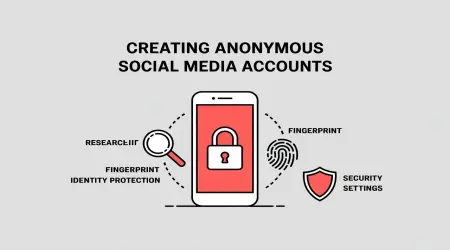
Temporary email addresses can certainly improve privacy in specific situations. They can help separate your primary identity from online services and reduce the amount of personal information you share. However, they do not automatically erase your digital footprint or prevent all forms of tracking.
Understanding this distinction is important. Privacy and anonymity are not the same thing, and temporary email addresses are designed primarily for convenience and privacy—not complete invisibility.
In this article, we'll explore how temporary emails work, what information they help protect, what data can still be collected, and whether temporary email addresses can actually be traced.
How Temporary Email Addresses Work
Before discussing traceability, it helps to understand what a temporary email address actually does.
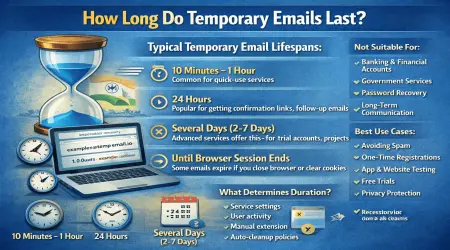
A temporary email service generates an email address that exists for a limited period of time. Users can receive messages such as verification emails, account activation links, and download instructions without using their permanent email account.
The process is usually quick and straightforward. In many cases, no registration is required.
From the perspective of the website you're signing up for, the temporary email often looks like a normal email address. The site sends a message, and the temporary inbox receives it.
This setup creates a layer of separation between your primary email account and the service you're using.
However, it's important to recognize what information is being hidden and what information is not.
The temporary email conceals your real email address, but it doesn't automatically hide every other aspect of your online activity.
That's where the question of traceability becomes more interesting.
What Temporary Emails Actually Protect
One of the biggest benefits of temporary emails is reducing the amount of personal information tied directly to your primary inbox.
For example, if you register for ten unfamiliar websites using temporary emails, those sites won't have your permanent email address on file.
This offers several advantages.
It reduces spam.
It limits the spread of your primary contact information.
It helps protect your inbox if one of those websites experiences a data breach.
It also creates a degree of separation between different parts of your digital life.
In this sense, temporary emails absolutely improve privacy.
If a company stores only your temporary email address and no other identifying information, connecting that account directly to your primary email becomes much more difficult.
However, privacy protection and traceability are not identical concepts.
The email address itself may be temporary, but other information may still be collected during the interaction.
What Can Still Be Tracked?
This is where many misconceptions arise.
Using a temporary email address does not prevent websites, apps, or online services from collecting other forms of information.
Depending on the service and your browsing environment, the following data may still be visible:
- IP addresses
- Device information
- Browser type and version
- Operating system details
- Location data
- Cookies
- Session activity
- Usage patterns
- Referral sources
Think about it this way.
Imagine attending an event while wearing a temporary name badge.
The badge hides your usual identity, but people can still see your appearance, hear your voice, observe your behavior, and recognize patterns.
Similarly, a temporary email only changes one piece of the information being shared online.
Many websites rely on multiple data points rather than email addresses alone to understand user activity.
As a result, temporary emails should be viewed as a privacy enhancement rather than a complete tracking prevention tool.
Can Law Enforcement Trace Temporary Emails?
This question often comes up whenever online anonymity is discussed.
The answer depends on several factors, including the service being used, applicable laws, available records, and the specific circumstances involved.
Generally speaking, temporary email addresses are not magical shields that prevent legitimate investigations.
Temporary email providers may maintain logs, server records, or other operational data depending on their policies and technical infrastructure.
In addition, websites receiving messages may store information associated with account registrations, login attempts, and user activity.
If multiple records can be connected, tracing activity may become possible.
The important takeaway is that temporary email addresses are designed for privacy and convenience, not for bypassing laws or avoiding accountability.
Most legitimate users rely on temporary emails simply to reduce spam, test services, and limit unnecessary exposure of personal information.
The Difference Between Privacy and Anonymity
One of the most useful concepts to understand is the difference between privacy and anonymity.
These terms are often used interchangeably, but they mean different things.
Privacy is about controlling who has access to your information.
Anonymity is about preventing others from knowing who you are.
Temporary email addresses are primarily privacy tools.
They help limit the sharing of your real email address and reduce unwanted communication.
They do not automatically make you anonymous.
For example, if you use a temporary email to sign up for a newsletter, you've improved privacy because your primary inbox remains protected.
However, if the website also collects your IP address, browser data, and activity history, complete anonymity may not exist.
Understanding this distinction helps set realistic expectations.
Temporary emails are valuable, but they solve a specific problem rather than every privacy challenge on the internet.
Common Situations Where Traceability Doesn't Matter
Interestingly, most people don't need complete anonymity in the first place.
The majority of temporary email users simply want practical benefits.
They want to:
- Avoid spam
- Test software trials
- Access free downloads
- Join temporary communities
- Explore new services
- Separate personal and experimental accounts
In these situations, the goal isn't to become untraceable.
The goal is to reduce unnecessary exposure.
For example, if you're comparing five productivity apps before choosing one, there's little reason to give every company your primary email address.
A temporary email allows you to evaluate the services while maintaining better control over your personal information.
For everyday users, this level of privacy is often more important than complete anonymity.
How to Improve Privacy Beyond Temporary Emails
If privacy is a priority, temporary emails work best as part of a broader strategy.
They are one tool among many.
Additional privacy practices may include:
- Using strong, unique passwords
- Enabling two-factor authentication
- Limiting unnecessary account creation
- Reviewing app permissions regularly
- Clearing cookies periodically
- Being cautious about sharing personal information
- Keeping software updated
Each of these habits addresses a different aspect of online privacy.
Together, they create a stronger overall approach than relying on any single tool.
Temporary emails fit into this strategy by helping reduce exposure of one of your most commonly shared pieces of information: your email address.
Conclusion
So, can temporary emails be traced?
The honest answer is yes, under certain circumstances.
A temporary email address hides your primary email account, which improves privacy and reduces unnecessary exposure. However, it does not automatically conceal every other piece of information associated with your online activity. Websites may still collect data such as IP addresses, browser details, device information, and usage patterns.
This doesn't make temporary emails ineffective. In fact, they remain one of the simplest and most practical privacy tools available for everyday internet use.
The key is understanding what they are designed to do.
Temporary emails help protect your primary inbox, reduce spam, and create separation between different online activities. They are excellent for short-term registrations, service testing, and minimizing digital clutter.
What they don't provide is guaranteed anonymity or immunity from all forms of tracking.
Like most privacy tools, their value comes from using them with realistic expectations and combining them with other good digital habits.
Have you ever used a temporary email address for privacy reasons? Share your thoughts and experiences in the comments, and let us know whether temporary emails have changed the way you manage your online identity.