
Can Temporary Emails Help Reduce Data Breach Exposure?
Data breaches have become an unfortunate reality of modern digital life.
Almost every internet user has encountered news about a company exposing customer information due to a security incident. Sometimes the breach affects a small business. Other times, it impacts millions of users around the world. Regardless of the size, the result is often the same: personal information that was meant to remain private ends up in the wrong hands.
For many people, these stories create an uncomfortable question: How much of my information is already scattered across the internet?
The answer is often more than we realize.
Think about all the websites, apps, online stores, newsletters, forums, and free tools you've signed up for over the years. Every account you've created likely required at least one piece of personal information, and in most cases, that included your email address.
While an email address may seem relatively harmless, it often serves as a central part of your digital identity. It's used for account recovery, notifications, subscriptions, and communication across countless online services. When a company's database is compromised, email addresses are frequently among the exposed records.
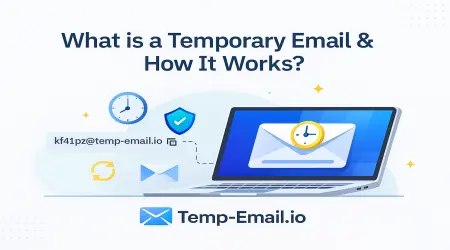
This is one reason temporary email addresses have gained popularity. They offer a simple way to reduce the amount of personal information connected to unfamiliar or low-priority services.
But can temporary emails actually reduce data breach exposure?
The answer is yes—at least to a certain extent. While they aren't a complete solution to online security challenges, they can play an important role in minimizing risk and limiting the impact of certain types of breaches.
Let's take a closer look at how temporary emails work and where they fit into a smart privacy strategy.
Understanding Data Breach Exposure
Before discussing temporary emails, it's important to understand what data breach exposure actually means.
A data breach occurs when unauthorized individuals gain access to information stored by an organization. This can happen through hacking, software vulnerabilities, misconfigured systems, insider threats, or even simple human error.
The type of information exposed varies widely.
Some breaches involve only email addresses. Others may include names, phone numbers, passwords, physical addresses, purchase histories, or other sensitive information.
When security incidents occur, users often focus on the most dramatic details. However, even seemingly basic information can create problems.
For example, an exposed email address can be used for:
- Spam campaigns
- Phishing attacks
- Credential stuffing attempts
- Targeted scams
- Social engineering efforts
The more frequently your email address appears in databases across the internet, the more opportunities exist for exposure.
This doesn't mean every website is unsafe. Many organizations invest heavily in cybersecurity. However, no system is completely immune to risk.
Reducing unnecessary exposure is often one of the most practical ways to improve online privacy.
How Temporary Emails Limit Exposure
A temporary email address works as a buffer between your primary identity and the services you're testing or exploring.
Imagine you're signing up for a free online tool that you've never used before. The website requires an email address for verification, but you're not sure whether you'll continue using the service after the initial trial.
If you provide your primary email address, it becomes part of that company's database.
If the company experiences a breach in the future, your email address could potentially be included in the exposed information.
However, if you use a temporary email address instead, the situation changes.
The breached database may still contain an email address, but it isn't your primary inbox. It isn't connected to your everyday communications, important accounts, or long-term digital identity.
In this sense, temporary emails reduce the value of the information exposed during a breach.
The breach still occurs.
The database is still compromised.
But the information tied directly to you may be significantly reduced.
This is one of the main reasons privacy-conscious users often rely on temporary email addresses when interacting with unfamiliar platforms.
Protecting Your Primary Inbox from Secondary Risks
One often overlooked consequence of data breaches is the increase in unwanted communication that follows.
When email addresses become publicly available or circulate among malicious actors, users may experience a surge in spam, phishing emails, and fraudulent messages.
These communications can be surprisingly convincing.
A phishing email might appear to come from a trusted company. It may reference a real service you've used or imitate a legitimate password reset request.
The goal is usually to trick users into revealing sensitive information or clicking malicious links.
Temporary email addresses help reduce this risk by creating distance between your primary inbox and lower-priority services.
If a temporary address becomes associated with spam after a breach, the impact is generally limited to that disposable account.
Your primary inbox remains protected from much of the resulting noise.
This separation makes it easier to identify important messages while reducing exposure to potentially harmful communications.
A Realistic Example
Consider a common scenario.
Michael discovers a new website offering free design templates. To download the files, he must create an account.
The website appears useful, but it's relatively new, and Michael knows very little about the company behind it.
Instead of using his primary email address, he registers with a temporary email.
He verifies his account, downloads the templates, and never returns to the site.
Six months later, the company experiences a security incident. User records are exposed, including registered email addresses.
Because Michael used a temporary email, the exposed information has limited value. His primary inbox remains unaffected, and future spam campaigns targeting the compromised address have little impact on his daily digital life.
Would the breach still have occurred?
Yes.
Did the temporary email prevent the breach?
No.
Did it reduce Michael's personal exposure to the consequences?
Absolutely.
This distinction is important when evaluating the role of temporary emails in privacy protection.
What Temporary Emails Cannot Protect Against
While temporary emails can reduce certain risks, they are not a complete defense against data breaches.
This is one of the most important points to understand.
A temporary email only protects the information it replaces.
If a website collects your real name, phone number, address, payment information, or other identifying details, those records may still be exposed during a breach.
Similarly, temporary emails do not protect against:
- Weak passwords
- Malware infections
- Phishing attacks targeting other accounts
- Identity theft involving unrelated data
- Poor security practices by users
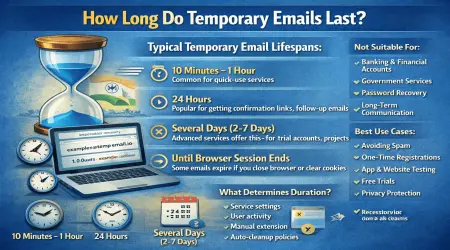
In some situations, a temporary email may also create challenges if you need long-term access to an account. Password recovery, support requests, and account verification processes often rely on a persistent email address.
For this reason, temporary emails are generally best suited for low-risk activities such as testing services, downloading resources, joining temporary communities, or exploring unfamiliar platforms.
They are not a replacement for comprehensive cybersecurity practices.
Building a Smarter Privacy Strategy
The most effective approach to online privacy is not relying on a single tool but combining multiple protective habits.
Temporary emails can be one part of that strategy.
Other useful practices include:
- Using strong, unique passwords for every account
- Enabling two-factor authentication when available
- Reviewing app and website permissions regularly
- Limiting unnecessary information sharing
- Keeping software and devices updated
- Monitoring accounts for suspicious activity
When combined with these habits, temporary emails provide an additional layer of protection.
They help reduce the number of databases containing your primary email address and create separation between important accounts and experimental online activity.
This layered approach is often far more effective than relying on any single privacy tool.
My opinion
So, can temporary emails help reduce data breach exposure?
In many situations, yes.
While they cannot prevent data breaches from occurring, they can reduce the amount of personal information tied to unfamiliar services and limit the impact when security incidents happen. By acting as a buffer between your primary inbox and lower-priority websites, temporary emails help minimize spam, reduce phishing exposure, and strengthen overall privacy.
It's important to remember that temporary emails are not a complete security solution. They work best as part of a broader strategy that includes strong passwords, good account management practices, and thoughtful sharing of personal information.
In an online world where data breaches are increasingly common, reducing unnecessary exposure is often one of the smartest steps users can take.
Sometimes improving privacy isn't about building higher walls. It's about leaving less information exposed in the first place.
Have you ever used a temporary email address to protect your privacy? Share your experiences in the comments, and let us know whether disposable emails have helped you manage online security more effectively.