Can Temporary Emails Reduce Identity Theft?
The first time I realized my email wasn’t really “mine”
I still remember the moment it clicked for me.
A few years ago, I signed up for a random website just to download a free guide. Nothing serious. One email. That’s it. Or at least, that’s what I thought.
Within a few days, my inbox started changing.
Not dramatically. But slowly.
More newsletters I never asked for. More “limited-time offers.” More suspicious-looking emails that felt… slightly off.
And I remember thinking one simple thing:
“How did my email end up everywhere?”
That’s when I first heard about temporary emails. At that time, I honestly thought they were just for tech people or hackers or something like that. But the idea stuck with me.
Because the real question wasn’t about spam.
It was something deeper:
Can temporary emails actually protect us from identity theft?
Let’s talk about it in a simple, real-world way.
Why your email address is more powerful than you think
Most people don’t think of their email as “sensitive information.”
It feels harmless. Just a login tool. Just a way to receive messages.
But in reality, your email is more like a digital master key.
Think about it.
Almost everything in your online life is connected to it:
Your bank account. Your social media. Your shopping apps. Your work tools. Even your old accounts you forgot exist.
Now here’s the problem.
The more your email spreads across the internet, the more places it can be exposed.
And once it appears in a data breach somewhere—and yes, breaches happen more often than people think—it can become part of a much bigger puzzle about you.
Identity theft doesn’t usually start with dramatic hacking scenes like in movies.
It starts quietly.
One leaked email here. One reused password there. A few personal details collected from different platforms.
Slowly, someone could piece things together.
That’s why privacy tools like temporary emails suddenly started getting attention.
Not because they’re “cool.”
But because they reduce exposure.
So what exactly is a temporary email in real life?
Let’s keep this simple.
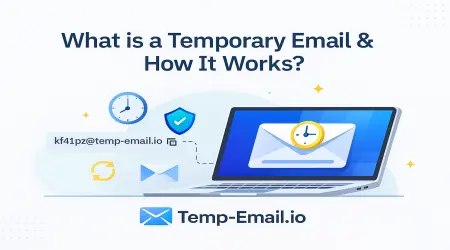
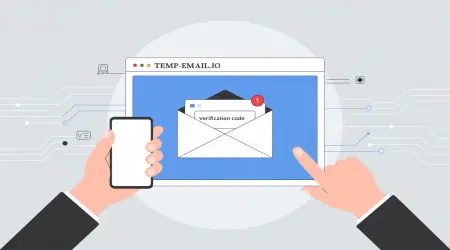
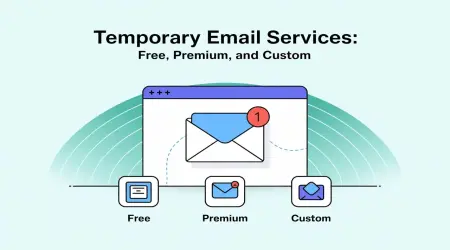
A temporary email is like a throwaway digital identity.
You create it, use it for something quick, and then forget about it.
No long-term commitment. No personal connection.
Imagine you walk into a shop, and instead of giving your home address, you give a PO box that disappears after a few days.
That’s basically the idea.
You use it for things like:
- Signing up for free trials
- Downloading a file
- Testing a website
- Accessing something once
And then you leave it behind.
The website still gets an email address, but not your real one.
And that small difference matters more than most people realize.
The real connection between temporary emails and identity theft
Now let’s come to the heart of it.
Can temporary emails reduce identity theft?
Yes… but not in a magical way.
They don’t “block hackers” directly. They don’t encrypt your life. They don’t make you invisible.
What they do is much simpler—and actually more realistic:
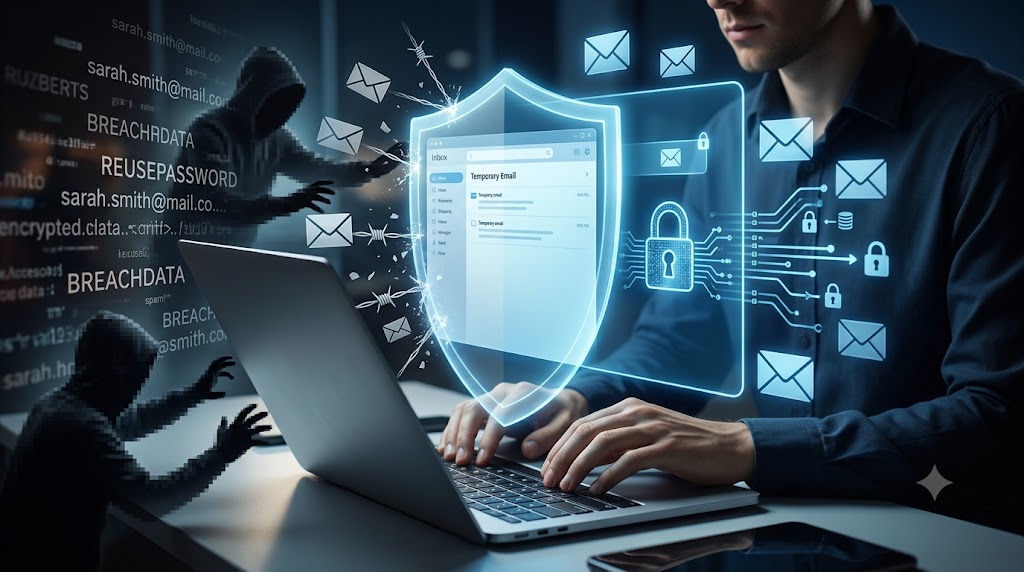
They reduce the number of places your real identity is exposed.
And that matters a lot.
Because identity theft often happens through accumulation.
Not one big attack.
But dozens of small exposures over time.
Here’s how temporary emails help in that process:
When you use your real email everywhere, you’re creating a long trail of digital breadcrumbs. If even one of those websites gets hacked, your email may end up in leaked databases.
But if you use a temporary email instead for random websites, that trail becomes shorter.
Less exposure = fewer opportunities for misuse.
It’s not about complete protection.
It’s about reducing risk.
A simple story that makes it clearer
Let me give you a very simple example.
Imagine two people: Ali and Sara.
Ali uses his personal email for everything. Every app. Every download. Every sign-up. He doesn’t really think about it.
Sara is a bit more careful. She uses her real email only for important things like banking, work, and trusted platforms. For everything else, she uses temporary emails.
Fast forward two years.
Both of them get caught in data breaches.
But here’s the difference:
Ali’s email appears in multiple leaked databases from random websites he barely remembers.
Sara’s email appears in far fewer places because many of those sign-ups never used her real identity.
Now ask yourself:
Who is more likely to get targeted by phishing emails or identity scams?
Probably Ali.
Not because he did something wrong.
But because his digital footprint is wider.
That’s the real power of temporary emails.
Where temporary emails actually help (and where they don’t)
This is important because a lot of people misunderstand temporary emails.
They think it’s a full privacy shield. It’s not.
It helps in some situations—but not all.
They are useful when you’re dealing with low-trust or one-time websites. Things like downloads, promotions, forums, or random tools you’re just testing.
In those cases, you’re basically saying the following:
“I don’t want this website to remember me forever.”
But there’s another side.
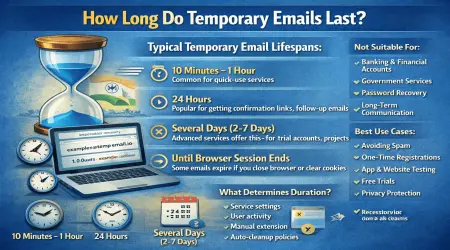
Temporary emails are not suitable for serious accounts.
Like banking. Government services. Medical portals. Anything important.
Why?
Because if you lose access to that temporary inbox, you lose access to your account recovery too.
And that can become a bigger problem than spam ever was.
So the real idea is balance.
Use them where they make sense. Not everywhere.
Identity theft is not just about email—it’s about patterns
Here’s something most beginners don’t realize.
Identity theft today is less about stealing one thing… and more about building a profile of you.
Cybercriminals and data brokers don’t just want your email.
They want patterns.
Where you shop. What you like. Which apps you use. When you’re active online.
Your email is just one entry point.
That’s why temporary emails alone cannot “solve” identity theft.
But they can reduce one major piece of the puzzle: exposure.
And in cybersecurity, reducing exposure is a big deal.
It’s like locking some doors in your house even if you can’t secure the entire neighborhood.
A small habit that can actually make a big difference
You don’t need to completely change your online life.
You don’t need to become paranoid or overly technical.
A simple habit shift is enough:
Use your real email only where it truly matters.
And for everything else?
Consider a temporary email.
Over time, this small habit quietly reduces spam, reduces tracking, and reduces your digital footprint.
It won’t make you invisible.
But it will make you less “loud” online.
And in today’s internet, being less visible is sometimes the best protection you can have.
So… can temporary emails reduce identity theft?
Yes.
But in a realistic way.
They don’t stop hackers.
They don’t prevent all fraud.
They don’t guarantee safety.
What they do is reduce exposure—and exposure is where many modern identity theft risks begin.
Think of it like this:
Every time you use your real email on a random website, you’re leaving a small piece of yourself behind.
Temporary emails simply help you decide which pieces are worth leaving behind… and which are not.
And honestly, that kind of control is becoming more valuable every year.
Final thoughts
The internet is not getting simpler.
If anything, it’s becoming more connected, more automated, and more data-driven.
That means your personal information is constantly moving through systems you don’t fully see.
Temporary emails are not a perfect solution, but they are a smart, simple layer of protection that anyone can use without technical knowledge.
And sometimes, the simplest tools are the ones that actually make a difference.
So maybe the better question isn’t just
“Can temporary emails reduce identity theft?”
But also
“How much of my real identity do I actually need to share online?”
That answer… is something only you can decide.
If you’ve ever used a temporary email, or if you’re thinking about it now, I’d genuinely love to hear your experience. It’s one of those topics where real stories matter more than theory.