How Apps Track You Even Before You Create an Account
You haven’t even signed up… but somehow the app already “knows” you
There’s a strange moment most of us have experienced, even if we don’t talk about it much.
You open a new app or visit a website for the first time. No login. No account. You’re just exploring.
And yet, everything already feels strangely familiar. The app shows your country, your language, maybe even content that feels oddly relevant. You didn’t tell it anything… but it behaves like it already knows you a little.
That feeling is not imagination. It’s real. But it’s also not as mysterious as it seems once you understand what’s happening behind the screen.
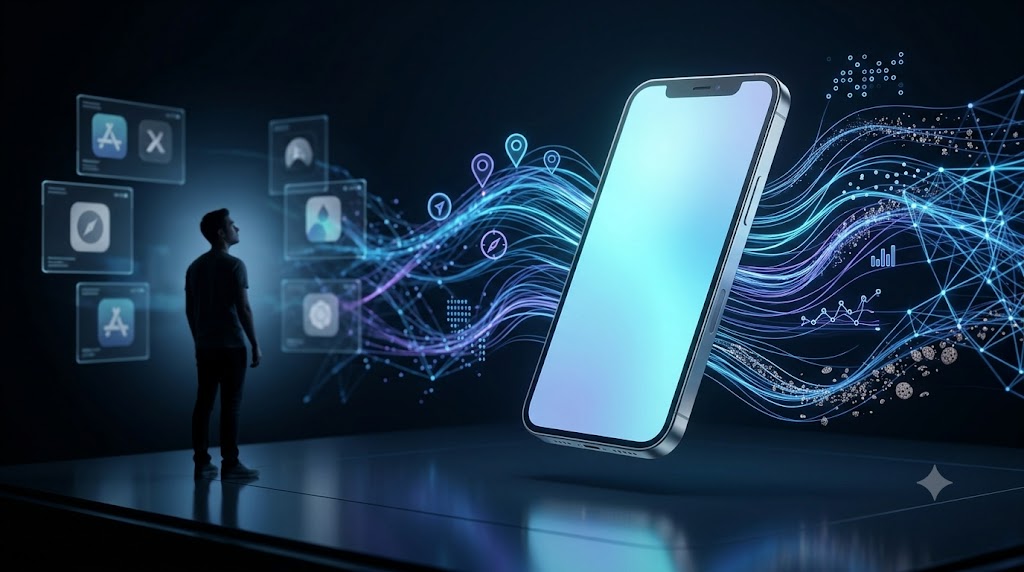
Modern apps don’t wait for you to sign up anymore. The moment you open them, they begin collecting small signals about your device and your behavior. Nothing dramatic. Nothing like your name or identity at first. Just quiet technical details that slowly build a picture of who you might be.
And that’s where the story really begins.
The internet doesn’t need your name to recognize patterns
One of the biggest misunderstandings about privacy is the idea that tracking starts only after account creation.
In reality, apps don’t need your name to understand you. They start with something much simpler.
Your device speaks before you do.
It tells the system what language your phone is set to. It reveals your approximate location through your internet connection. It shows what kind of device you’re using, whether it’s a budget Android phone or a high-end iPhone, and even how your screen behaves.
Individually, none of this feels important. But when these tiny signals come together, they start forming patterns. And patterns are powerful.
Because patterns don’t need your identity. They only need consistency.
If your device behaves like someone in Karachi browsing late at night, the system starts placing you into that category. If your browsing style matches certain user groups, the app quietly adjusts what it shows you.
It’s not guessing your name. It’s predicting your behavior.
And that prediction is often enough.
The invisible layer working every time you open an app
What most people don’t realize is that apps don’t rely on a single tracking method. There isn’t just one “system” watching you.
Instead, there are multiple invisible layers working together in the background.
Some of them are built into websites through tiny tracking elements. Others are part of mobile apps themselves. They quietly observe how long you stay, what you click, how fast you scroll, and what you ignore.
Even your pauses matter.
The way you hesitate before clicking something can be recorded as a behavioral signal.
It sounds a bit intense when you think about it like this, but in real terms, it’s not always used for anything harmful. Most of the time, it’s used to improve user experience. Apps want to load faster, show relevant content, and reduce friction.
But the same system that improves convenience is also capable of building detailed behavioral profiles long before you create an account.
And that’s the part most users never notice.
A simple moment that reveals everything
Let’s imagine something ordinary.
You open a shopping app you’ve never used before. You didn’t log in. You didn’t sign up. You just wanted to see what it looks like.
Within seconds, you’re already seeing prices in your currency. The app shows products that are available in your region. Even the language feels perfectly matched.
You might think, “Wow, this app is smart.”
And it is. But not in the way we usually think.
It didn’t recognize you personally. It recognized your environment.
Your IP address gave away your general location. Your device settings revealed your language preference. Your screen type suggested what kind of device you’re using.
From these small clues, the app builds a “temporary version” of you. Not your identity, but a behavioral outline.
And that outline is enough to customize your experience before you’ve even taken your first step.
Why apps do this (and why it’s not always evil)
It’s easy to assume this kind of tracking is purely negative. But the reality is more layered.
Apps do this because they want to reduce friction. Nobody likes opening an app and seeing irrelevant content. If everything feels disconnected or random, users leave quickly.
So early tracking helps apps:
understand your region so they can show relevant content
adjust language automatically so you don’t struggle
improve loading speed based on your device
filter out bots or fake traffic
From a business perspective, it’s logical. From a user perspective, it feels a bit unsettling once you become aware of it.
And that’s where the tension lies.
Not in whether tracking exists, but in how invisible it is.
The idea of a “shadow profile” before you even exist in the system
There’s a concept in digital privacy that sounds almost fictional at first, but it’s very real in practice.
Even before you create an account, systems can start building what people often call a shadow profile.
It doesn’t contain your name or email. Instead, it contains behavior patterns.
Things like:
what type of content you look at
how long you stay on certain pages
what device you use repeatedly
how often you return without signing up
Over time, these small signals form a profile that doesn’t belong to a “person” yet, but still behaves like one.
And once you finally create an account, that profile can sometimes connect back to you.
This is how personalization feels instant in modern apps. Because in many cases, the system has already learned from your behavior before you officially joined.
The moment that made me more aware of all this
I remember testing a fitness app once just out of curiosity.
I didn’t sign up. I didn’t enter any details. I just explored it for a few minutes and closed it.
Later that same day, I started seeing fitness-related ads across different platforms. Not directly from the app, but through connected ad networks.
That’s when it clicked for me.
You don’t need to “join” something for it to observe you anymore.
Just interacting with it briefly is enough to leave traces.
Not personal identity traces, but behavioral ones.
And those traces travel further than most people expect.
So can you actually avoid this tracking completely?
The honest answer is no, not entirely.
The modern internet is built on interaction and data signals. Even basic browsing requires some level of communication between your device and the server.
But here’s the more important part.
You don’t need to disappear from the internet to protect your privacy.
You just need awareness.
Because most tracking doesn’t happen through secret hacking. It happens through everyday convenience. Through apps that feel useful, fast, and personalized.
The goal isn’t to reject all technology. The goal is to understand what you’re exchanging for that convenience.
A calmer way to think about your digital presence
Instead of thinking “I am being watched,” it’s more accurate to think:
“My behavior is being interpreted.”
That small shift changes everything.
Because once you understand that apps are reading patterns, not identities, it becomes easier to navigate the internet without fear.
You can choose when to engage deeply. You can choose when to stay anonymous. And you can choose when a service actually deserves your real information.
That is real control.
Not hiding completely. But deciding intentionally.
Final thoughts
Modern apps tracking you before you create an account is not science fiction. It’s already part of how the internet works today.
But it’s not about someone personally watching you. It’s about systems collecting small signals and turning them into useful predictions.
Once you understand that, the experience feels less mysterious and more logical.
And maybe even a little empowering.
Because now you know what’s happening behind the scenes… even before you press “Sign up.”
If this made you think differently about apps, I’d genuinely love to know your experience. Have you ever felt like an app “knew you” before you joined?