How Temporary Emails Help You Test New Services Safely
Trying a new online service has never been easier. Whether it's a productivity app, AI tool, streaming platform, online course, shopping website, or social media community, there seems to be a new service launching every day. Most of them promise to make life easier, save time, or solve a specific problem.
But before you can explore what they offer, there's usually one small requirement: create an account.
At first, this doesn't seem like a big deal. Enter your email address, verify your inbox, and you're ready to go. The problem is that many people repeat this process dozens or even hundreds of times every year. Over time, their primary email address becomes connected to countless websites, apps, and services they may never use again.
This creates several challenges. Your inbox fills with promotional emails. Your personal information becomes scattered across multiple databases. If a company experiences a data breach, your email address could be exposed. In some cases, you may even forget which services have access to your information.
This is where temporary email addresses can be incredibly useful.
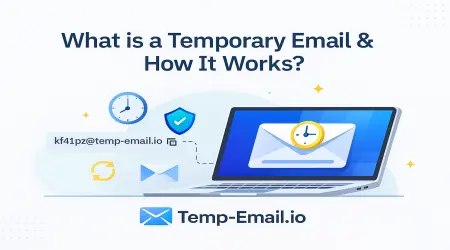
A temporary email address provides a simple way to test new services without immediately exposing your primary email account. It acts as a protective layer between you and unfamiliar platforms, allowing you to explore new tools while maintaining greater control over your personal information.
As concerns about online privacy and data security continue to grow, more internet users are turning to temporary emails as a practical solution. Let's explore how they work and why they can make testing new services significantly safer.
Why Testing New Services Comes with Hidden Risks
Most people focus on the benefits of a new service without thinking much about what happens after signup.
Imagine you're looking for a project management tool. You find five promising options and create accounts on all of them. A week later, you've chosen your favorite and abandoned the others.
Unfortunately, the unused services still have your email address.
Many companies continue sending newsletters, feature announcements, promotional offers, and reminders long after you've stopped using their platform. Some make unsubscribing easy. Others don't.
The issue goes beyond marketing emails.
Every time you register for a service, your information becomes part of another database. While reputable companies invest heavily in security, no system is completely immune to breaches or unauthorized access. The more places your information is stored, the greater your potential exposure.
There's also the challenge of trust.
When trying a brand-new service, you may know very little about the company behind it. How do they handle user data? What privacy practices do they follow? How long will they retain your information?
In many cases, users don't discover the answers until after they've already signed up.
Temporary emails provide a way to reduce these risks while still allowing you to explore and evaluate new services.
How Temporary Emails Create a Privacy Buffer
One of the biggest advantages of a temporary email address is the privacy buffer it creates.
Think of it like using a guest parking pass instead of giving someone permanent access to your garage. You're granting limited access for a specific purpose rather than opening the door completely.
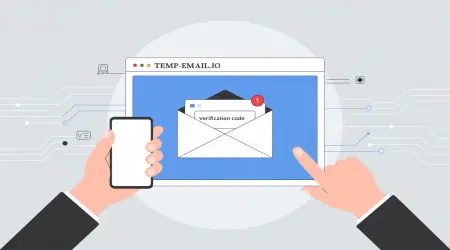
When you use a temporary email to register for a new service, the platform communicates with the temporary inbox rather than your primary account. This allows you to receive verification links, account activation messages, and other essential communications without revealing your main email address.
This separation offers several benefits.
First, it protects your primary inbox from unwanted marketing messages. If the service begins sending excessive emails, your personal account remains unaffected.
Second, it reduces the number of organizations that have direct access to your primary email address. This can help minimize tracking, profiling, and future spam.
Third, it allows you to evaluate a service before deciding whether it deserves a more permanent connection to your digital life.
Many people treat their primary email address like their home address. They don't hand it out casually because they understand its value. Temporary emails allow users to apply the same level of caution online.
A Practical Example of Safe Service Testing
Let's imagine a real-world scenario.
Sarah is looking for a new AI-powered writing assistant. She finds several tools through online reviews and wants to compare their features.
Each platform requires account creation before she can access the free trial.
If Sarah uses her primary email address for every signup, she immediately exposes that address to multiple companies she knows very little about. Some may be reputable. Others may disappear within a few months.
Instead, Sarah uses a temporary email address for the initial registration process.
She verifies her account, explores the platform, tests the features, and evaluates whether the service is worth using long-term.
After a few days, she identifies one tool that genuinely meets her needs. At that point, she can choose to register with her permanent email address if she wants ongoing access.
The other trial accounts simply expire along with the temporary email.
This approach allows Sarah to make informed decisions without unnecessarily expanding her digital footprint.
The same strategy works for software trials, online communities, educational platforms, shopping sites, and many other types of services.
Reducing Spam Before It Starts
Spam remains one of the most common frustrations associated with online registrations.
Many users assume they can simply unsubscribe later if they start receiving too many emails. While this works in some cases, it's often easier to prevent the problem from developing in the first place.
Temporary emails help achieve exactly that.
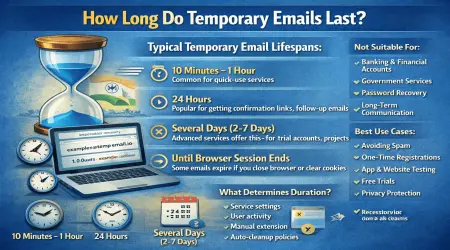
When a temporary email address expires, future messages sent to that address generally become inaccessible. Since the inbox is no longer active, promotional campaigns, newsletters, and marketing sequences lose their effectiveness.
This proactive approach can significantly reduce inbox clutter.
Consider how many websites offer free downloads, webinars, discount codes, or exclusive content in exchange for an email address. Some provide genuine value. Others use these offers primarily as lead-generation tools.
By using temporary emails selectively, users can access the content they need without committing their primary inbox to months or years of marketing communications.
A cleaner inbox also makes it easier to spot important messages from family members, employers, financial institutions, and trusted services.
Supporting Better Digital Hygiene
Temporary emails aren't just about privacy. They also encourage better digital habits.
Many internet users accumulate dozens of online accounts over time. Some are forgotten within days of creation. Others remain inactive for years.
This creates unnecessary complexity.
The more accounts you maintain, the harder it becomes to track where your information is stored and how it's being used.
Temporary email addresses encourage a more intentional approach.
Before sharing your primary email address, you can ask yourself a simple question: "Do I actually plan to use this service long-term?"
If the answer is uncertain, a temporary email may be the better choice.
This mindset helps users separate casual experimentation from meaningful digital relationships.
Over time, this can lead to fewer abandoned accounts, reduced exposure to data collection, and greater awareness of online privacy practices.
Understanding the Limitations
While temporary emails offer many benefits, it's important to understand their limitations.
They are best suited for low-risk situations such as testing services, accessing free resources, or exploring unfamiliar platforms.
They are generally not appropriate for important accounts that require long-term access.
For example, banking services, healthcare portals, work-related accounts, government services, and critical subscriptions should typically be connected to a permanent email address that you control and monitor regularly.
Account recovery can also become difficult if a temporary email address expires. If you later decide to return to a service, you may not be able to regain access without creating a new account.
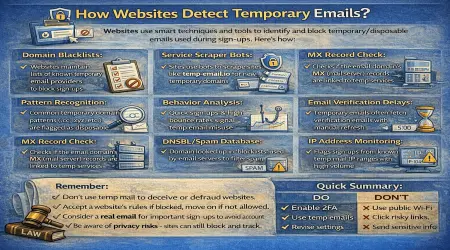
Additionally, some websites actively block temporary email providers because they want users to register with permanent contact information.
Understanding these limitations allows users to apply temporary emails strategically rather than relying on them for every online interaction.
Conclusion
Testing new online services is an important part of modern digital life. Whether you're exploring a new app, trying a software trial, joining a community, or evaluating a business tool, signup requirements are almost unavoidable.
However, sharing your primary email address with every service can create unnecessary privacy risks, increase spam, and expand your digital footprint.
Temporary email addresses offer a simple and practical solution. They allow you to test services safely, maintain greater control over your personal information, and decide which platforms deserve a more permanent place in your digital ecosystem.
While temporary emails aren't suitable for every situation, they can be an incredibly useful tool for experimentation and privacy-conscious browsing.
In a world where personal information is constantly being requested, having the ability to separate casual exploration from long-term commitment is more valuable than ever.
Have you ever used a temporary email address to test a new service? Share your experience in the comments and let us know whether it helped you avoid spam, protect your privacy, or discover a great new tool.