
Is Gmail.com a Disposable Temporary Email Domain? Full Guide (2026)
If you’ve ever tried to sign up for a website using your Gmail address and wondered whether it counts as a temporary email, you’re not alone. Many users today are asking:
👉 “Is gmail.com a disposable temporary email domain?”
With the rise of privacy concerns, spam emails, and data tracking, people are becoming more cautious about where they share their email addresses. Temporary email services have grown rapidly because they offer a quick and anonymous way to receive emails without exposing your personal inbox.
But Gmail is different.
It’s one of the most trusted and widely used email platforms in the world. Yet, features like aliases (using “+” addresses) and multiple account creation often confuse users into thinking Gmail can function like a disposable email service.
So, is Gmail actually a temporary email provider?
Or is it something entirely different?
In this complete guide, we’ll break down everything you need to know, including:
- Whether Gmail is a disposable email domain
- The difference between Gmail and temp mail services
- How Gmail aliases work
- When Gmail can act “like” a temp email
- Why services like https://temp-email.io/ are still necessary
By the end, you’ll clearly understand whether Gmail fits into the disposable email category—and when you should use a real temporary email instead.
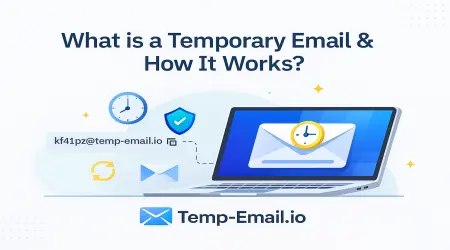
What Is a Disposable Temporary Email Domain?
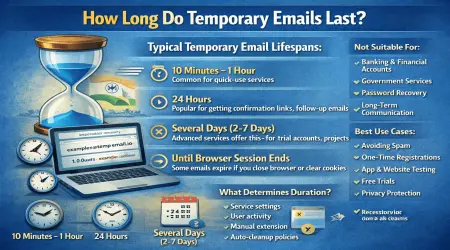
A disposable email domain is a service that provides temporary email addresses that expire after a short time.
Key Characteristics:
- No signup required
- Short lifespan
- Auto-deleted inbox
- Anonymous usage
Examples of Use:
- Website registrations
- Free trials
- Download verification
- Avoiding spam
These emails are designed for temporary access only, not long-term communication.
What Is Gmail.com?
Gmail.com is a permanent email service provided by Google.
Key Features:
- Long-term email storage
- Secure login and authentication
- Password protection
- Recovery options
- Cloud integration
Unlike disposable email services, Gmail is built for long-term use and reliability.
Is Gmail.com a Disposable Temporary Email Domain? (Short Answer)
👉 No, Gmail.com is NOT a disposable or temporary email domain.
Why?
- Gmail accounts do not expire
- Emails are stored permanently
- Requires signup and identity
- Provides account recovery
👉 Gmail is a persistent email service, not a temporary one.
Why Do People Think Gmail Is Disposable?
This confusion comes from Gmail’s flexible features.
1. Gmail Aliases (+ Trick)
You can use variations like:
All emails still go to your main inbox.
👉 This creates the illusion of multiple “temporary” emails.
2. Multiple Account Creation
Users can create multiple Gmail accounts.
But:
👉 These are still permanent accounts, not disposable ones.
3. Easy Access & Free Usage
Because Gmail is free and easy to use, some users treat it like temp mail.
But technically:
👉 It does NOT function as a disposable system.
Is Gmail.com a Disposable or Temporary Email Domain? (Detailed Answer)
Let’s directly address your keyword variations:
Is gmail.com a disposable or temporary email domain?
❌ No — it is a permanent email service.
Is gmail com a disposable temporary email domain?
❌ No — it does not auto-delete or expire.
Is gmail com a temporary or disposable email domain?
❌ No — it is designed for long-term communication.
Key Differences: Gmail vs Disposable Email
| Feature | Gmail | Temp Mail |
|---|---|---|
| Lifespan | Permanent | Temporary |
| Signup Required | Yes | No |
| Privacy | Moderate | High (anonymous) |
| Recovery | Yes | No |
| Security | Strong | Limited |
| Spam Risk | High | Low |
Can Gmail Be Used Like a Temporary Email?
👉 Partially — but not truly.
Ways Gmail Mimics Temp Mail:
- Using aliases
- Creating secondary accounts
- Filtering emails
Limitations:
- Emails remain stored
- Identity is still linked
- Not anonymous
- No auto-expiry
👉 So Gmail can simulate, but not replace temp mail.
Why Gmail Is NOT Suitable as Disposable Email
1. No Expiration
Emails stay forever unless manually deleted.
2. Identity Link
Your account may be tied to personal data.
3. Spam Accumulation
Over time, inbox gets cluttered.
4. No Anonymity
Google tracks activity for service improvement.
Why Use Temporary Email Instead?
Platforms like https://temp-email.io/ are built specifically for temporary use.
Advantages:
- Instant access
- No personal data required
- Automatic deletion
- No spam buildup
When Should You Use Gmail?
✔ Best For:
- Personal communication
- Work emails
- Important accounts
- Long-term usage
When Should You Use Temp Mail?
✔ Best For:
- One-time signups
- Free trials
- Testing platforms
- Avoiding spam
SEO Insight: Why This Question Is Trending
Search queries like:
- gmail.com disposable temporary email domain
- is gmail.com a disposable or temporary email domain
Are rising because:
👉 Users want privacy
👉 Spam is increasing
👉 Temp mail usage is growing
Common Myths About Gmail and Temp Mail
Myth 1: Gmail is disposable
❌ False — it’s permanent
Myth 2: Gmail aliases are temporary emails
❌ False — they still link to your main inbox
Myth 3: Multiple Gmail accounts = disposable emails
❌ False — still permanent accounts
Best Practice: Combine Gmail + Temp Mail
Smart users do this:
- Use Gmail for important tasks
- Use temp mail for risky or unknown websites
👉 This creates a balanced system.
Final Verdict
👉 Gmail.com is NOT a disposable temporary email domain
It is:
✔ Secure
✔ Reliable
✔ Long-term
But NOT:
❌ Anonymous
❌ Temporary
❌ Disposable
FAQ
Is Gmail disposable email?
No, it is a permanent email service.
Can Gmail be used as temp mail?
Only partially, but not truly disposable.
Why use temp mail instead of Gmail?
To avoid spam and protect privacy.
Is Gmail safe?
Yes, for long-term and secure communication.
Conclusion
Gmail and temporary email services serve completely different purposes.
If you want:
- Security and reliability → Use Gmail
- Privacy and temporary access → Use temp mail
Platforms like https://temp-email.io/ exist for a reason—they solve a problem Gmail was never designed to handle.