Should You Use Temporary Emails for Free Trials
Free trials have become one of the most common features on the internet. Whether you're testing a new streaming platform, trying a productivity tool, exploring an AI application, or evaluating business software, chances are you'll be asked to create an account before gaining access. In most cases, that process starts with one simple request: enter your email address.
At first, this seems completely harmless. After all, it's just an email. Most people type it in without giving it a second thought. But if you've spent years signing up for free trials, newsletters, downloadable resources, and online tools, you've probably noticed something interesting. Your inbox slowly becomes crowded with promotional messages, follow-up campaigns, renewal reminders, and marketing emails from services you may have forgotten months ago.
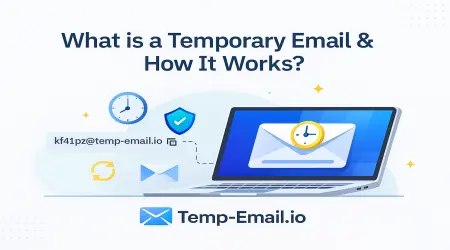
This is one reason temporary email services have gained popularity. Instead of using a personal email address for every free trial, users can generate a disposable email and receive the verification message without exposing their primary inbox. It sounds like a perfect solution, but is it always the right choice?
The answer is more nuanced than many people expect. Temporary emails can be incredibly useful in some situations, yet completely inappropriate in others. Understanding the difference can help you protect your privacy while avoiding problems down the road.
Why Free Trials Ask for Your Email in the First Place
Before deciding whether a temporary email is a good idea, it's worth understanding why companies ask for your email address when offering a free trial.
From a business perspective, email serves several purposes. It helps verify that users are real people rather than automated bots. It allows companies to communicate important information about the service, provide onboarding instructions, and send account-related notifications. In many cases, it also becomes the primary method for password recovery and customer support.
Of course, email also plays a role in marketing. Businesses know that many people who start a free trial won't immediately become paying customers. By collecting email addresses, they can continue communicating with users after the trial period ends and encourage them to return.
This approach makes sense from the company's perspective, but it creates a challenge for users. Not every free trial turns into a long-term relationship. In fact, many trials are simply tests. You might spend ten minutes exploring a tool before deciding it isn't right for you. Yet your email address could remain in the company's systems long after you've moved on.
That's where temporary emails start looking attractive.
The Benefits of Using Temporary Emails for Free Trials
One of the biggest advantages of temporary emails is their ability to protect your primary inbox from unnecessary clutter.
Imagine you're comparing five different project management tools for a personal project. Each one offers a free trial, and each requires registration. If you use your primary email address for all five services, you'll likely receive onboarding messages, promotional offers, feature announcements, and renewal reminders from each company.
Now multiply that experience over months or years.
Many internet users discover that a significant portion of their inbox consists of messages from services they tested once and never used again. Temporary emails can help prevent this accumulation by creating a separate inbox specifically for short-term interactions.
Another advantage is privacy. Every time you share your personal email address, you create another connection between your identity and an online service. While most legitimate companies handle user data responsibly, limiting unnecessary exposure is still a sensible practice. Temporary emails provide a layer of separation between your permanent digital identity and casual online experimentation.
For people who frequently test software, apps, or online platforms, this separation can make digital life feel cleaner and more manageable.
When Using a Temporary Email Makes Perfect Sense
There are many situations where a temporary email is a practical choice.
Suppose you're exploring a website you've never heard of before. The platform offers a free resource or short trial, but you're uncertain whether you'll ever use the service again. In this case, providing a temporary email allows you to access the content without committing your personal inbox to future communications.
The same logic applies when comparing multiple services before making a decision. If you're evaluating several tools and only plan to keep one, there's little reason to expose your primary email address to every platform you're testing.
Temporary emails can also be useful when accessing one-time content, participating in limited promotions, or experimenting with software that doesn't require ongoing account access.
In these scenarios, the temporary nature of the email aligns with the temporary nature of the interaction itself.
When a Temporary Email Is a Bad Idea
While temporary emails are useful, they are not appropriate for every free trial.
Consider a software platform that stores your work, personal projects, or important files. You begin using the free trial and quickly realize you love the service. A few months later, you decide to subscribe and continue using it regularly.
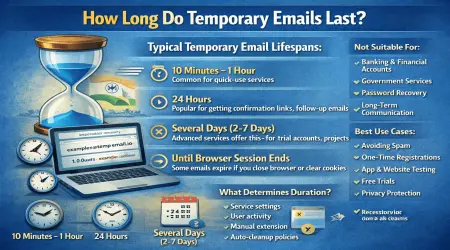
If you registered with a temporary email that has since expired, recovering your account could become difficult. Password resets, security alerts, and important account notifications may no longer reach you.
This is why temporary emails should generally be avoided for services that have long-term value. If there's a reasonable chance you'll continue using the platform, it's usually smarter to register with an email address you can access in the future.
The same principle applies to financial services, educational platforms, professional tools, healthcare-related applications, and any account where losing access could create problems.
A simple question can help guide the decision: "Will I still care about this account six months from now?" If the answer is yes, a permanent email is usually the safer option.
The Privacy vs Convenience Trade-Off
What makes this topic interesting is that there isn't a universal answer.
Using a temporary email offers privacy benefits. Using a permanent email offers convenience and long-term account management. Most of the time, users are balancing these two priorities.
Some people prefer maximum convenience. They use one primary email address for everything and rely on filters or folders to manage incoming messages. Others prefer greater separation and intentionally limit where their personal email appears online.
Neither approach is inherently right or wrong.
The goal should be finding a system that matches your online habits. Many privacy-conscious users adopt a layered strategy. They reserve their primary email for important accounts, use a secondary email for subscriptions and newsletters, and rely on temporary emails for one-time interactions and short-term trials.
This approach provides flexibility while reducing unnecessary exposure of their main inbox.
What the Future of Free Trials Might Look Like
As concerns about privacy, spam, and data collection continue to grow, user behavior is changing. More people are becoming aware of the value of their email address and are thinking carefully about where they share it.
At the same time, businesses are looking for ways to verify users while maintaining trust and transparency. This balance between user privacy and business needs will likely shape the future of online registrations.
Temporary emails will probably continue playing an important role in that landscape. They offer users more control over their digital footprint while still allowing access to online services. Rather than replacing traditional email accounts, they complement them by serving a specific purpose.
In many ways, temporary emails reflect a broader shift in how people think about online identity. Not every interaction needs to become a permanent relationship, and not every website needs long-term access to your personal inbox.
Conclusion
So, should you use temporary emails for free trials?
In many cases, yes. If you're testing a service, accessing one-time content, or exploring a platform you're unlikely to use again, a temporary email can help protect your inbox, reduce unwanted marketing messages, and add an extra layer of privacy.
However, temporary emails are not suitable for every situation. If there's a chance you'll continue using the service, need future account access, or rely on important communications, a permanent email address is usually the better choice.
The key is understanding the purpose of the free trial and your likely relationship with the service. Temporary emails work best when the interaction itself is temporary. For long-term accounts, accessibility and convenience often outweigh the benefits of a disposable address.
Ultimately, using temporary emails isn't about avoiding the internet. It's about being intentional with your digital identity and deciding when a short-term interaction deserves a permanent place in your inbox.
Have you ever used a temporary email for a free trial? Did it help reduce spam and clutter, or did you later wish you had used a permanent address? Share your experience and join the conversation.