Temporary Email and Data Protection Laws: What You Should Know
As concerns about online privacy continue to grow, users are becoming more careful about how their personal data is collected and used. Email addresses, in particular, are a key part of digital identity—and often the first piece of data shared online.
This raises an important question:
How do temporary email services fit into data protection laws?
In this article, we’ll explain temporary email and data protection laws, how disposable email supports privacy regulations, and what users should know when using services like temp-email.io.
What Is a Temporary Email Address?
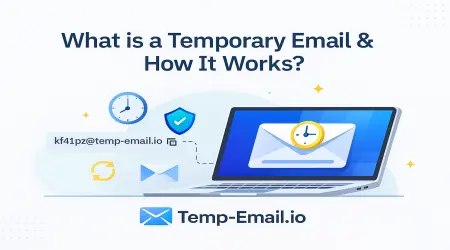
A temporary email address (also known as disposable email or temp mail) is a short-term inbox that allows users to receive emails without sharing their real email address. These inboxes automatically expire, and emails are deleted after a set period.
If you’re new to the topic, start here:
👉 What Is a Temporary Email Address? (Beginner Guide)
(internal link suggestion: /what-is-temporary-email)
Why Email Addresses Matter in Data Protection
Under modern data protection laws, an email address is considered personal data because it can:
Identify an individual directly or indirectly
Be used for tracking and profiling
Be shared or sold to third parties
Be exposed during data breaches
This is why protecting your email address is an important privacy step.
Temporary email helps reduce unnecessary exposure of personal data.
How Temporary Email Supports Data Protection Principles
Most global data protection laws are built around similar core principles. Temporary email aligns naturally with many of them.
1. Data Minimization
Data protection laws encourage collecting only the minimum data required.
Temporary email:
Shares a short-term address instead of a permanent one
Avoids linking email to personal identity
Reduces long-term data storage
This supports data minimization by design.
👉 Learn how temp email is structured:
How Temporary Email Works Behind the Scenes
(internal link suggestion: /how-temporary-email-works)
2. Purpose Limitation
Many laws state that personal data should only be used for a specific purpose.
Temporary email is ideal for:
One-time registrations
Email verification
Accessing content
Once the purpose is fulfilled, the inbox expires—preventing reuse or misuse of data.
3. Storage Limitation
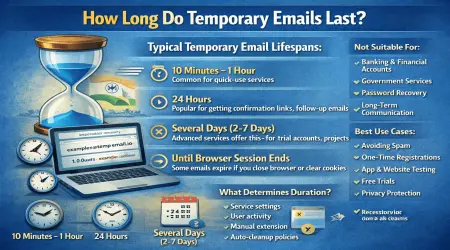
Temporary email services automatically delete emails after a short time.
This means:
No long-term data retention
No permanent inbox storage
Reduced risk from old data leaks
👉 Learn more about inbox expiration:
How Long Do Temporary Emails Last?
(internal link suggestion: /temporary-email-lifetime)
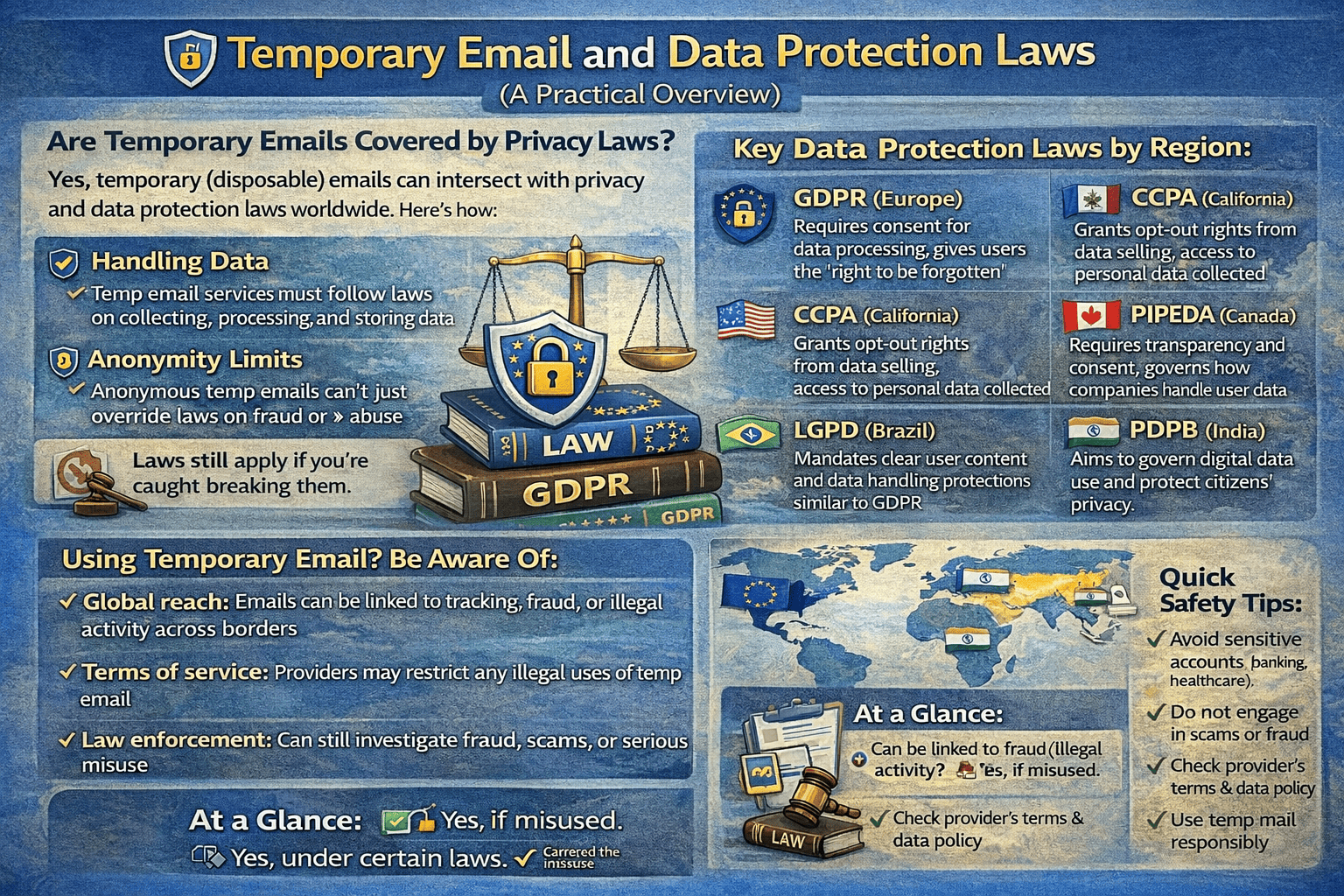
Temporary Email and GDPR (European Union)
Under the General Data Protection Regulation (GDPR):
Users have the right to protect personal data
Sharing less personal information is encouraged
Unnecessary data retention is discouraged
Using temporary email:
Limits personal data sharing
Reduces the amount of data companies store
Helps users stay compliant with privacy-first practices
Temporary email is fully legal under GDPR when used responsibly.
Temporary Email and Indian Data Protection Laws
India’s data protection framework (including the Digital Personal Data Protection Act) focuses on:
Lawful data processing
Purpose limitation
Data minimization
User consent
Using temporary email in India is legal and aligns with privacy protection goals—as long as it’s not used for illegal activity.
👉 Read the legal overview:
Is Temporary Email Legal in India and Worldwide?
(internal link suggestion: /is-temporary-email-legal)
Is Using Temporary Email Against Website Policies?
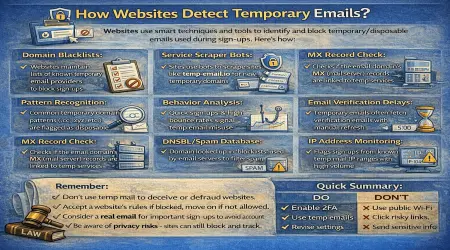
Some websites block temporary email addresses, but this is not a legal issue.
It’s simply:
A business or platform policy
An anti-abuse measure
Blocking temp email does not mean the service is illegal.
👉 Learn more:
Why Some Websites Block Temporary Emails
(internal link suggestion: /temp-email-blocked)
What Temporary Email Does NOT Replace
Temporary email supports privacy—but it does not replace secure personal email for everything.
Do not use temporary email for:
Banking
Financial services
Government portals
Long-term personal accounts
👉 Compare both clearly:
Temporary Email vs Personal Email: Key Differences
(internal link suggestion: /temporary-email-vs-personal-email)
Can Temporary Email Be Tracked Under Data Laws?
Temporary email reduces tracking but does not make users invisible.
It protects against:
Email-based profiling
Long-term marketing tracking
It does not protect against:
IP tracking
Cookies
Browser fingerprinting
👉 Learn more:
Can Temporary Emails Be Tracked or Hacked?
(internal link suggestion: /temporary-email-tracked-hacked)
Why temp-email.io Fits Data Protection Standards
temp-email.io follows privacy-friendly practices:
No user registration
No personal data collection
Automatic email deletion
Short-term inbox lifecycle
Minimal data retention
These features naturally support modern data protection laws.
👉 Try it instantly:
Free Temporary Email Inbox
(internal link suggestion: /)
Best Practices for Staying Compliant and Safe
To use temporary email responsibly:
Use it only for short-term, low-risk activities
Avoid sensitive or financial information
Complete verification before inbox expiration
Combine with privacy-friendly browsing habits
👉 Learn proper usage:
When Should You Use Temporary Email?
(internal link suggestion: /when-to-use-temp-email)
Final Thoughts
Temporary email is not just convenient—it’s also aligned with the goals of modern data protection laws.
By minimizing personal data sharing, limiting storage duration, and reducing tracking, temporary email helps users take control of their digital privacy.
When used responsibly, services like temp-email.io offer a legal, privacy-friendly way to navigate today’s data-driven internet.