Temporary Email Use Cases Explained
Temporary email addresses are no longer just a niche tool for tech users. Today, they are used by students, professionals, developers, and everyday internet users to protect privacy and keep inboxes clean.
But when exactly should you use a temporary email?
And what are the most common real-world use cases?
In this article, we’ll clearly explain the most popular temporary email use cases, how they work in practice, and why services like temp-email.io are useful in each situation.
What Is a Temporary Email Address?
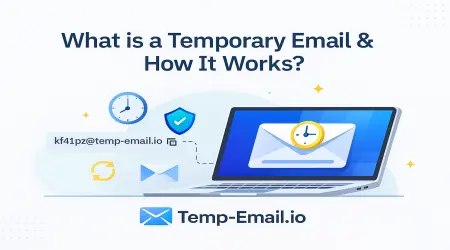
A temporary email address (also called disposable email or temp mail) is a short-term inbox that lets you receive emails without revealing your personal or work email address. These inboxes automatically expire after a fixed time.
If you’re new, start here:
👉 What Is a Temporary Email Address? (Beginner Guide)
(internal link suggestion: /what-is-temporary-email)
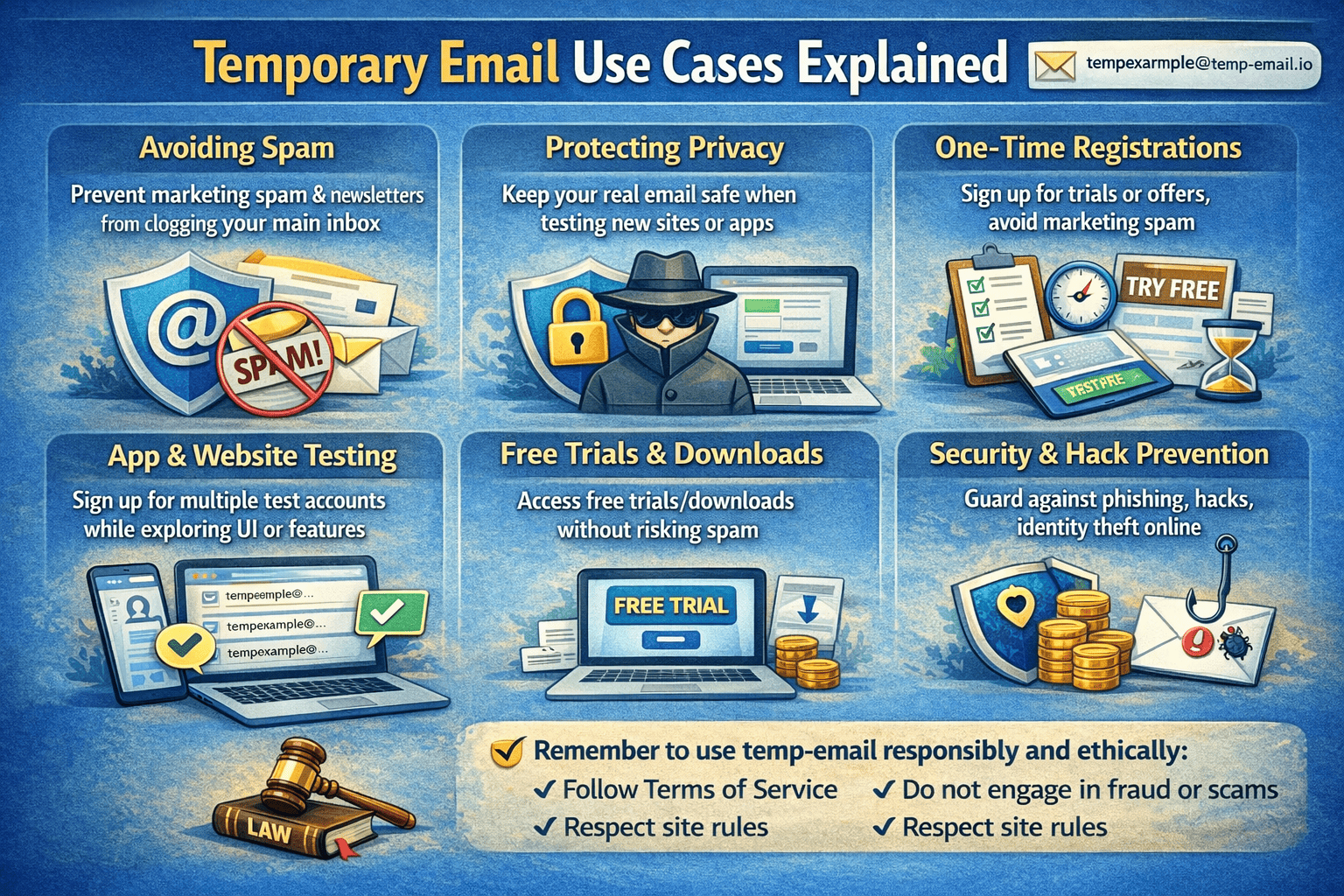
1. Website Signups Without Spam
Use Case: One-Time Registrations
Many websites require email registration just to:
View content
Join forums
Access tools
Download resources
Using your personal email for every signup often leads to spam.
With a temporary email from temp-email.io, you can:
Complete the signup
Receive the verification email
Avoid long-term promotional emails
👉 Learn how this works technically:
How Temporary Email Works Behind the Scenes
(internal link suggestion: /how-temporary-email-works)
2. Free Trials and Promotional Offers
Use Case: Testing Services Before Commitment
Free trials often require an email address, but not every service is worth keeping.
Temporary email is ideal for:
Software trials
Streaming trials
Online tools
SaaS platforms
Once the trial ends, the inbox expires—no follow-up emails, no marketing reminders.
3. Avoiding Spam & Marketing Emails
Use Case: Inbox Protection
Email addresses are often shared or sold to advertisers.
Using a temporary email:
Keeps your personal inbox clean
Reduces marketing emails
Eliminates constant unsubscribe requests
This is one of the most common reasons users choose temp-email.io.
👉 Read more:
Why People Use Disposable Email Addresses
(internal link suggestion: /why-people-use-disposable-email)
4. Downloading Free Resources
Use Case: PDFs, eBooks, Whitepapers
Many websites require email verification to download:
eBooks
Guides
PDFs
Templates
Temporary email lets you:
Get the download link
Access the file
Avoid ongoing newsletters
This is a perfect short-term use case.
5. Testing Apps, Websites & Forms
Use Case: Developers & Testers
Developers, QA testers, and marketers often need to:
Test signup flows
Check email delivery
Verify confirmation emails
Temporary email helps by:
Avoiding multiple real accounts
Speeding up testing
Keeping test data separate
👉 Learn when it’s best to use temp email:
When Should You Use Temporary Email?
(internal link suggestion: /when-to-use-temp-email)
6. Protecting Privacy on Untrusted Websites
Use Case: Privacy-First Browsing
Not all websites are trustworthy.
Temporary email is useful when:
You’re unsure about a site’s data practices
You want to minimize personal data exposure
You want anonymous interaction
This aligns with privacy-by-design principles.
👉 Read more about privacy and legality:
Is Temporary Email Legal in India and Worldwide?
(internal link suggestion: /is-temporary-email-legal)
7. Forums, Comments & Community Platforms
Use Case: Low-Commitment Participation
Some forums or communities require email verification even for basic participation.
Temporary email is useful for:
Commenting on blogs
Joining short-term discussions
Asking one-time questions
If you don’t plan long-term participation, a disposable inbox makes sense.
8. Separating Important and Unimportant Emails
Use Case: Better Email Organization
Many users use both:
Personal email → important accounts
Temporary email → casual signups
This separation:
Keeps important emails visible
Reduces inbox overload
Improves focus
👉 Compare both clearly:
Temporary Email vs Personal Email: Key Differences
(internal link suggestion: /temporary-email-vs-personal-email)
9. Short-Term Email Needs Only
Use Case: Time-Limited Access
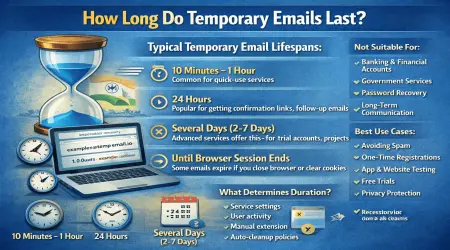
Temporary email works best when you need email access for:
A few minutes
A few hours
A single session
👉 Learn more about inbox duration:
How Long Do Temporary Emails Last?
(internal link suggestion: /temporary-email-lifetime)
When Temporary Email Should NOT Be Used
Temporary email is not suitable for:
Banking
Financial services
Government portals
Long-term personal or business accounts
👉 See a balanced view here:
Advantages and Disadvantages of Temporary Email
(internal link suggestion: /advantages-disadvantages-temp-email)
Why temp-email.io Fits These Use Cases
temp-email.io is designed for:
Instant inbox creation
No signup or passwords
Automatic email deletion
Privacy-focused usage
It supports all common temporary email use cases while remaining simple and beginner-friendly.
👉 Try it instantly:
Free Temporary Email Inbox
(internal link suggestion: /)
Final Thoughts
Temporary email is not about replacing your personal email—it’s about using the right tool for the right job.
From avoiding spam to testing apps and protecting privacy, temporary email solves many everyday problems when used correctly.
If you want a fast, reliable, and privacy-friendly disposable email solution, temp-email.io is built to handle these use cases with ease.