Temporary Email vs Personal Email: Key Differences Explained
Email is a core part of our digital life. From social media and shopping to banking and work, almost everything depends on an email address. But not all emails serve the same purpose.
Today, many users rely on temporary email addresses alongside their personal email—and for good reason.
In this article, we’ll break down the key differences between temporary email and personal email, explain when to use each, and help you decide which one is right for your needs using services like temp-email.io.
What Is a Temporary Email?
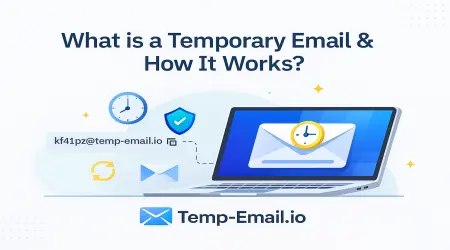
A temporary email (also known as disposable email or temp mail) is a short-term email address that lets you receive messages without using your real inbox. It automatically expires after a certain time.
If you’re new to this concept, start here:
👉 What Is a Temporary Email Address? (Beginner Guide)
(internal link suggestion: /what-is-temporary-email)
What Is a Personal Email?
A personal email is a long-term email account such as Gmail, Outlook, or Yahoo Mail that you use for:
Important communications
Account recovery
Banking and financial services
Work or business use
Personal emails are designed for permanent use and long-term storage.
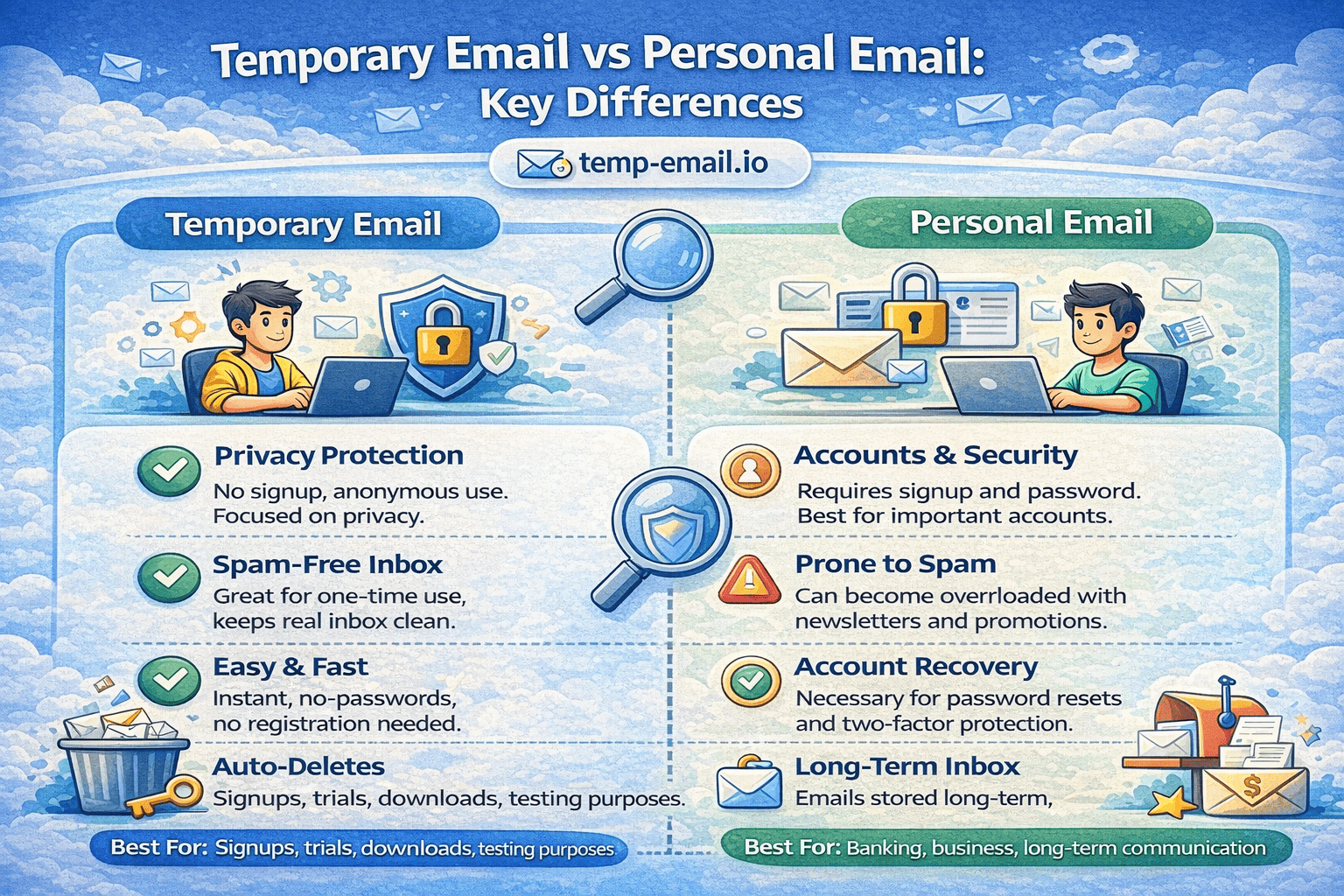
Temporary Email vs Personal Email: Quick Comparison
| Feature | Temporary Email | Personal Email |
|---|---|---|
| Signup Required | ❌ No | ✅ Yes |
| Password Needed | ❌ No | ✅ Yes |
| Privacy Level | ✅ High | ⚠️ Medium |
| Email Lifetime | ⏳ Short-term | ♾️ Long-term |
| Spam Protection | ✅ Excellent | ⚠️ Moderate |
| Account Recovery | ❌ Not Possible | ✅ Available |
| Best For | One-time use | Important accounts |
1. Privacy Protection
Temporary Email
Temporary email services like temp-email.io are built with privacy in mind:
No personal data required
No account profiles
Emails auto-delete
This makes them ideal when you don’t trust a website.
👉 Learn more about privacy-first design:
How Temporary Email Works Behind the Scenes
(internal link suggestion: /how-temporary-email-works)
Personal Email
Personal email providers store:
Your profile information
Email history
Login data
This is necessary for recovery and long-term use—but it also means more data is stored.
2. Spam & Inbox Cleanliness
Temporary Email
Temporary email is excellent for avoiding spam:
Promotional emails go to a disposable inbox
Your main inbox stays clean
No need to unsubscribe later
This is one of the biggest reasons users choose temp-email.io.
Personal Email
Personal emails often get flooded with:
Newsletters
Marketing emails
Promotional offers
Over time, inbox management becomes difficult.
3. Ease of Use
Temporary Email
Using a temporary email is extremely simple:
Open the website
Copy the email address
Receive emails instantly
No setup. No passwords.
👉 Try it instantly here:
Free Temporary Email Inbox
(internal link suggestion: /)
Personal Email
Personal emails require:
Account creation
Password management
Security verification
This is fine for long-term use but not ideal for quick tasks.
4. Email Lifetime & Storage
Temporary Email
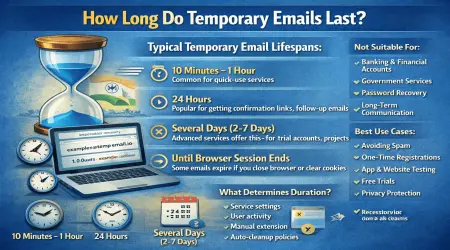
Temporary emails are designed to expire:
Emails auto-delete
Inbox disappears after a set time
No long-term storage
👉 Learn about inbox expiration:
Email Lifetime & Auto-Delete
(internal link suggestion: /email-lifetime)
Personal Email
Personal emails store messages indefinitely unless you delete them manually. This is useful for:
Records
Attachments
Long-term communication
5. Security & Recovery
Temporary Email
Temporary emails:
Cannot recover passwords
Should not be used for important accounts
Are meant for non-sensitive tasks
Personal Email
Personal email is required for:
Password recovery
Two-factor authentication
Financial and official services
This makes personal email essential for serious use.
6. Best Use Cases
When to Use Temporary Email
Use temporary email when:
Signing up for websites you don’t trust
Downloading free resources
Accessing trials
Testing apps or forms
👉 Read more:
When Should You Use Temporary Email?
(internal link suggestion: /when-to-use-temp-email)
When to Use Personal Email
Use personal email when:
Creating long-term accounts
Banking or financial services
Work and business communication
Important subscriptions
Why Many Users Use Both
Smart users don’t choose one—they use both.
Personal email for important, trusted services
Temporary email for everything else
This balance keeps inboxes clean and privacy protected.
Platforms like temp-email.io make it easy to add temporary email into your daily browsing routine.
Final Thoughts
Temporary email and personal email serve different purposes.
Temporary email offers speed, privacy, and spam protection
Personal email provides stability, recovery, and long-term access
Understanding the key differences helps you stay safer online and manage your digital life better.
If you want a fast, private way to handle one-time signups, temp-email.io is the perfect companion to your personal email.