The Inbox of Tomorrow: What Email Will Look Like by 2030
The Inbox of Tomorrow: What Email Will Look Like by 2030
Remember when opening your email felt simple?
You would log in, read a few messages from friends or colleagues, maybe receive a newsletter or two, and then move on with your day. Fast forward to today, and things look very different. Most people wake up to dozens of emails. Promotions, notifications, receipts, verification codes, marketing campaigns, subscription reminders, and spam all compete for attention.
For many people, email has become less of a communication tool and more of a digital storage room that never stops filling up.
That raises an interesting question.
What will email look like by 2030?
Will we still be scrolling through crowded inboxes? Will spam finally disappear? Could artificial intelligence manage our emails better than we can?
The truth is that email is not dying. In fact, it remains one of the most important communication tools in the world. What is changing is the traditional inbox itself. The inbox we know today may look completely different by the end of this decade.
Let's explore what the future might hold.
Why the Traditional Inbox Is Reaching Its Limits
Imagine walking into your home every morning and finding hundreds of letters scattered across your floor.
Some are important. Some are advertisements. Some are scams. Others are just random updates you never asked for.
That is essentially what many inboxes feel like today.
The average internet user creates accounts on dozens, sometimes hundreds, of websites throughout their lifetime. Every account generates emails. Social media platforms send notifications. Online stores send promotions. Streaming services send recommendations.
Eventually, important messages become buried beneath endless digital noise.
This growing problem is one reason technology companies are rethinking how email should work in the future.
Instead of expecting humans to organize everything manually, future inboxes will likely become much smarter.
Artificial Intelligence Will Become Your Personal Email Assistant
One of the biggest changes coming to email is the rise of AI-powered inbox management.
Right now, most email services offer basic filtering. Messages get sorted into categories like Promotions, Social, or Updates.
By 2030, AI may handle far more than that.
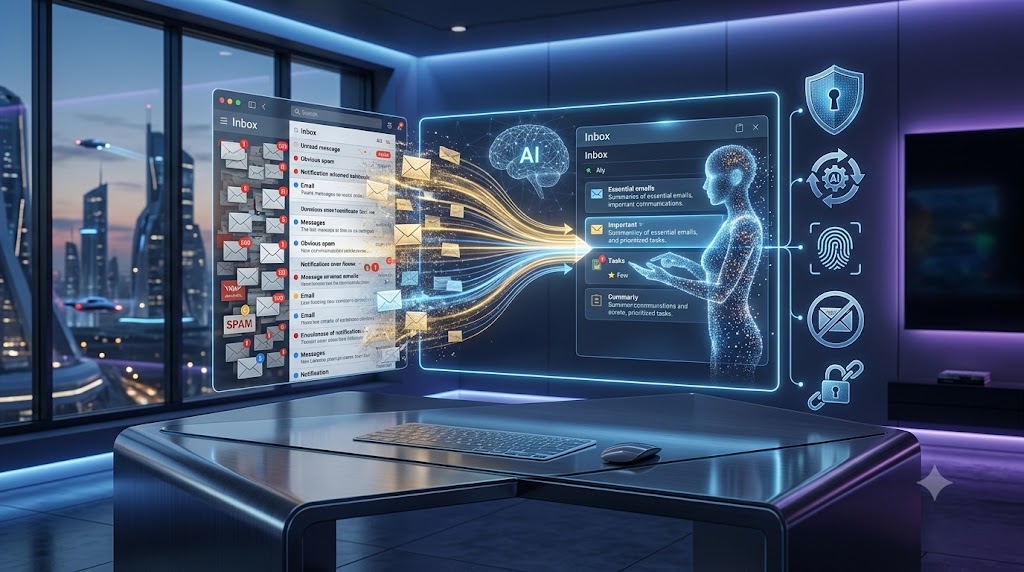
Imagine opening your inbox and seeing only five emails instead of fifty.
Why?
Because your AI assistant has already read the rest.
Before that sounds scary, think about how useful it could be.
The system could:
- Summarize long email threads
- Highlight urgent messages
- Ignore low-priority promotions
- Draft replies automatically
- Schedule meetings based on your calendar
- Warn you about suspicious emails
Instead of managing emails, users may simply review AI-generated summaries.
A typical morning might begin with a short message saying:
"You received 42 emails overnight. Three require immediate attention. Five contain important updates. The remaining 34 have been archived automatically."
That sounds much less stressful than sorting through dozens of messages manually.
Spam Might Finally Lose the Battle
For years, spam has been one of the internet's biggest annoyances.
No matter how advanced filters become, unwanted messages always seem to find a way through.
But the future looks promising.
AI systems are becoming increasingly effective at recognizing patterns associated with spam, phishing attempts, and scams.
By 2030, future inboxes may evaluate thousands of signals before a message ever reaches a user.
Instead of placing suspicious emails into a spam folder, many may be blocked entirely before delivery.
Think about it.
Most users never want to see scam emails in the first place. Future systems may remove them before they even enter the inbox ecosystem.
That doesn't mean cybercriminals will disappear. They will continue adapting.
However, the balance of power may finally shift toward users.
Email Could Become More Private Than Ever
Privacy has become one of the most important topics in technology.
Many internet users are beginning to realize how much personal information they share online.
This awareness is already changing how people use email.
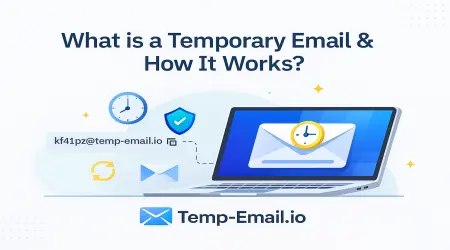
Temporary email services, private email providers, and encrypted communication platforms have grown significantly in popularity over recent years.
By 2030, privacy could become a standard feature rather than a premium option.
Future email services may offer:
Built-In Encryption
Messages could be encrypted automatically without requiring technical knowledge.
Users may not even notice it happening behind the scenes.
Disposable Email Identities
Instead of using one email address everywhere, users might generate temporary identities for different activities.
For example:
- One identity for shopping
- One for social media
- One for work
- One for online communities
If one address gets compromised, the rest remain protected.
Stronger Data Ownership
Users may gain more control over how companies collect, store, and use their email information.
As privacy regulations evolve around the world, businesses may be required to become more transparent about data usage.
Verification Emails May Disappear
Think about how often you receive verification emails today.
Create an account.
Check your inbox.
Click a link.
Confirm your identity.
Repeat.
The process works, but it isn't particularly elegant.
By 2030, authentication methods could become far more advanced.
Biometric technology, digital identity systems, device verification, and passkeys are already reducing dependence on passwords.
As these systems mature, many traditional verification emails could become unnecessary.
Instead of checking your inbox for confirmation links, your trusted device might verify your identity instantly.
The result?
Fewer interruptions and a smoother online experience.
The Rise of Interactive Emails
Today's emails are mostly static.
You open them, read them, and maybe click a link.
Future emails could function more like mini-applications.
Imagine receiving an email invitation to a meeting.
Instead of clicking through multiple pages, you could:
- Accept the invitation
- Choose a time slot
- Join a video call
- Complete a survey
- Make a payment
All without leaving the email itself.
Some versions of this technology already exist today, but by 2030, interactive email experiences could become the norm.
The line between websites and emails may become increasingly blurred.
Digital Clutter Will Become a Bigger Concern
There is another side to this conversation that many people overlook.
As technology becomes smarter, users may become overwhelmed by digital clutter in new ways.
Think about your smartphone.
Many apps promise convenience. Yet notifications constantly compete for your attention.
The same challenge applies to email.
If AI-generated content, automated newsletters, and machine-created marketing campaigns continue growing, inboxes could become even busier than they are today.
That means future email platforms must do more than filter messages.
They must protect attention.
Attention is becoming one of the most valuable resources in the digital world.
The companies that help users manage attention effectively will likely dominate the future of communication.
Businesses Will Need to Earn Inbox Access
Marketers have relied on email for decades.
And honestly, email marketing is not going away.
It remains one of the most effective ways to communicate with customers.
However, the rules may change dramatically by 2030.
As AI filters become smarter, low-quality promotional emails may struggle to reach users.
Businesses will need to provide genuine value.
Generic marketing messages could be filtered out automatically.
Instead, successful brands may focus on:
- Personalized communication
- Helpful content
- Relevant recommendations
- Customer-first experiences
In other words, inbox access may become something companies have to earn rather than assume.
That could create a healthier relationship between businesses and consumers.
Could Email Eventually Replace Some Social Media Functions?
This idea sounds surprising at first.
After all, social media and email serve different purposes.
Yet there are signs of overlap.
Many creators now build communities through newsletters instead of relying entirely on social platforms.
Why?
Because email offers direct communication.
Algorithms cannot easily hide messages from subscribers.
As trust in social platforms fluctuates, some users may prefer receiving content directly in carefully curated inboxes.
By 2030, newsletters, community updates, and creator content could become even more important.
The future inbox may function as both a communication center and a personalized content hub.
What the Average Inbox Might Look Like in 2030
Let's imagine a typical day.
You wake up and check your email.
Instead of seeing 87 unread messages, your inbox displays a simple dashboard.
Your AI assistant has already organized everything.
A short summary appears:
"You received 63 messages today."
Three require action.
Two are from family members.
One work-related deadline needs attention.
The rest have been sorted, summarized, or archived automatically.
No spam.
No endless scrolling.
No hunting for important information.
Just relevant communication delivered at the right time.
It sounds futuristic, but many of the technologies needed for this experience already exist.
The next few years will focus on refinement rather than invention.
Will Email Still Matter in 2030?
Absolutely.
People have predicted the death of email for decades.
Social media was supposed to replace it.
Messaging apps were supposed to replace it.
Collaboration platforms were supposed to replace it.
Yet email remains essential.
Businesses use it.
Schools use it.
Governments use it.
Consumers use it.
What is changing is not email itself.
The real transformation involves how information reaches users.
The traditional inbox—a long list of messages sorted by time—is slowly becoming outdated.
The future inbox will likely be smarter, more personalized, more private, and far less stressful.
Final Thoughts
The death of the traditional inbox does not mean the death of email.
Instead, it signals the beginning of a new era.
By 2030, artificial intelligence, stronger privacy protections, advanced authentication methods, and attention-focused design could completely reshape how we manage digital communication.
The inbox of the future may no longer be a cluttered list of messages waiting for us to sort. It may become an intelligent assistant that organizes information, protects privacy, and delivers only what truly matters.
And honestly, after years of battling spam, endless notifications, and overflowing inboxes, that future sounds pretty appealing.
What do you think email will look like in 2030? Share your thoughts in the comments and join the conversation. If you enjoyed this article, consider sharing it with friends who are curious about the future of technology.