The Lifecycle of a Temporary Email Address
Lifecycle of a Temporary Email
Have you ever signed up for a website and immediately regretted giving away your email address?
Maybe you wanted to download a free ebook, access a webinar, read a research report, or try a new app. A few days later, your inbox started filling up with promotional emails, newsletters you never intended to subscribe to, and offers that seemed impossible to escape.
Most internet users have experienced this at some point. It's one of the reasons temporary email addresses have become increasingly popular over the last few years.
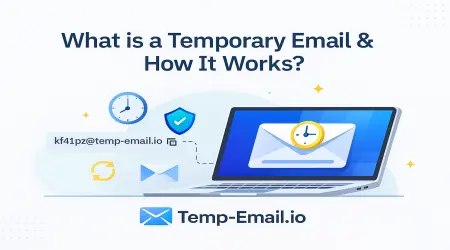
A temporary email address, often called a disposable email address, is designed for short-term use. Instead of sharing your primary email account everywhere you go online, you can use a temporary address for one-time registrations, quick downloads, and other situations where you don't want long-term communication.
What many people don't realize is that a temporary email address has its own lifecycle. Just like a product has a journey from creation to disposal, a temporary email address follows a series of stages before it eventually disappears.
Understanding this lifecycle can help you make smarter decisions about online privacy, security, and data management. It also provides a fascinating look at how modern internet users are adapting to a world where personal information has become increasingly valuable.
Let's take a closer look at the complete lifecycle of a temporary email address, from birth to expiration.
The Birth of a Temporary Email Address
Every temporary email address begins with a simple need.
Perhaps you're signing up for a discussion forum. Maybe you want access to a free trial. Or perhaps you're testing a new online service and aren't sure whether you'll continue using it.
In the past, people often used their primary email address for these situations. Over time, however, concerns about spam, data collection, and privacy encouraged users to look for alternatives.
This is where temporary email services come into play.
When a user visits a temporary email platform, a unique email address is automatically generated. In many cases, the process takes only seconds. There's usually no registration, password creation, or lengthy setup process.
The email address may look completely ordinary. To the website requesting it, there is often no obvious indication that it's temporary.
At this stage, the temporary email address serves one purpose: creating a buffer between the user's real identity and the online service they're interacting with.
Think of it as using a guest pass instead of handing over your permanent membership card.
The goal is not necessarily secrecy. Rather, it's about minimizing unnecessary exposure of personal information.
The Active Phase: Receiving Messages
Once the temporary email address is created, it enters its most important stage: active use.
This is when the address receives incoming messages.
Suppose you're registering for a software trial. The company sends a verification email containing a confirmation link. That message arrives in the temporary inbox, allowing you to complete the signup process without using your personal email account.
For many users, this stage lasts only a few minutes. They receive the verification message, click the required link, and move on.
However, some temporary email addresses remain active for hours or even days depending on the service being used.
During this phase, the inbox may receive various types of messages:
- Account verification emails
- Download links
- Password setup instructions
- Trial activation emails
- Promotional offers
- Welcome messages
The active phase is where temporary email addresses provide the most value. They allow users to access online services while maintaining a degree of separation from their primary digital identity.
Many people use temporary emails strategically. Instead of exposing their personal inbox to dozens of websites, they reserve their main email account for important communications while using disposable addresses for lower-priority interactions.
As inboxes become increasingly crowded, this separation can make everyday email management much easier.
The Transition Period: Useful but Temporary
After the initial signup or verification process is complete, a temporary email address enters an interesting middle stage.
The immediate task has been accomplished, but the address may still have some value.
For example, a user might want access to follow-up emails related to a webinar registration. Someone testing a software product might need occasional notifications during a trial period.
At this point, the temporary email address acts as a short-term communication channel.
This stage often reveals the true difference between temporary and permanent email accounts.
A traditional email address is designed to build a long-term history. Messages accumulate over months and years. Folders grow larger. Contact lists expand. The inbox becomes part of a person's digital life.
A temporary email address follows a completely different philosophy.
Its purpose is not to become a permanent record. Instead, it exists only as long as it remains useful.
This temporary nature is one of its greatest strengths. Users don't have to worry about organizing messages, cleaning old folders, or managing years of accumulated emails.
The address exists for a specific purpose and eventually reaches the end of its usefulness.
The Expiration Stage
Every temporary email address eventually reaches expiration.
This is the stage that truly defines its lifecycle.
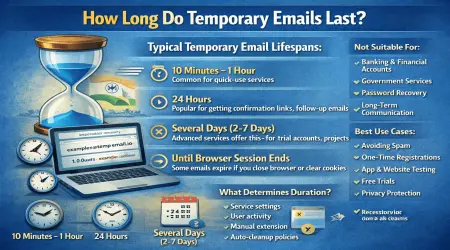
Depending on the service, expiration may occur after a few minutes, several hours, a few days, or a predetermined period selected by the user.
Once the expiration point arrives, the address typically becomes inactive.
New messages can no longer be received.
In many cases, the inbox and all associated emails are automatically deleted.
This process serves several important purposes.
First, it protects privacy. Since the address no longer exists, future messages cannot reach it.
Second, it reduces long-term data storage requirements for the service provider.
Third, it reinforces the core purpose of temporary identities: short-term utility rather than permanent presence.
Imagine renting a hotel room for one night. After checkout, the room is cleaned and prepared for future guests. A temporary email address works in a similar way. Once its purpose has been fulfilled, it is retired from active use.
For users, this can be surprisingly liberating. There is no obligation to maintain the account, monitor future messages, or deal with ongoing marketing campaigns.
The lifecycle naturally comes to an end.
What Happens After Expiration?
Many people assume that the story ends once a temporary email address expires.
In reality, expiration raises some interesting questions about digital footprints and data retention.
The email address itself may disappear, but information shared during its active period may still exist elsewhere.
For example, the website where the address was used may continue storing account information. Marketing databases may retain records of the registration. Analytics systems may still contain behavioral data associated with the interaction.
This highlights an important lesson about online privacy.
A temporary email address can reduce exposure, but it does not automatically erase every trace of online activity.
Privacy is often about reducing risk rather than achieving complete invisibility.
Users who understand this distinction tend to make better decisions about their digital habits.
The expiration of a temporary email address closes one communication channel, but responsible online behavior remains important regardless of the tools being used.
Why the Lifecycle Matters
Understanding the lifecycle of a temporary email address provides insight into a broader shift taking place online.
People are becoming more selective about how they share personal information.
A decade ago, many users handed out their email addresses without much thought. Today, growing awareness of spam, tracking, data breaches, and digital profiling has encouraged a more cautious approach.
Temporary email addresses are one response to this changing environment.
Their lifecycle reflects a simple but powerful idea: not every online interaction requires a permanent relationship.
Sometimes you only need an email address for a few minutes. Sometimes a few days is enough. In those situations, creating a long-term communication channel may not make sense.
By allowing identities to exist only when needed, temporary email systems give users more control over their digital lives.
This doesn't mean permanent email accounts are disappearing. They remain essential for work, personal communication, financial services, and many other activities.
Instead, temporary email addresses are becoming another tool in the modern privacy toolkit.
They help users decide when permanence is necessary and when it isn't.
Conclusion
The lifecycle of a temporary email address is surprisingly simple yet remarkably effective.
It begins with creation, serves a specific purpose during active use, remains available for a limited period when necessary, and eventually expires when its job is complete.
This lifecycle mirrors the growing demand for greater privacy and control in today's digital world. Rather than exposing personal email accounts to every website and online service, users can create temporary communication channels that disappear when they are no longer needed.
While temporary email addresses are not a complete privacy solution, they can help reduce spam, limit unnecessary data exposure, and simplify online interactions.
As internet users continue to seek smarter ways to manage their digital footprints, temporary email addresses will likely remain an important part of the online privacy landscape.
Have you ever used a temporary email address? Share your experiences in the comments and let us know whether disposable emails have helped you manage privacy, reduce spam, or simply keep your inbox a little cleaner.