The Privacy Cost of Clicking "Sign Up With Email"
We've all done it.
You land on a website that promises something useful—a free ebook, a discount code, access to an exclusive article, or perhaps a new app you want to try. A signup box appears, asking for just one thing: your email address.
It feels harmless.
After all, it's only an email. Not your credit card number. Not your home address. Not your passport details. Just a simple email address.
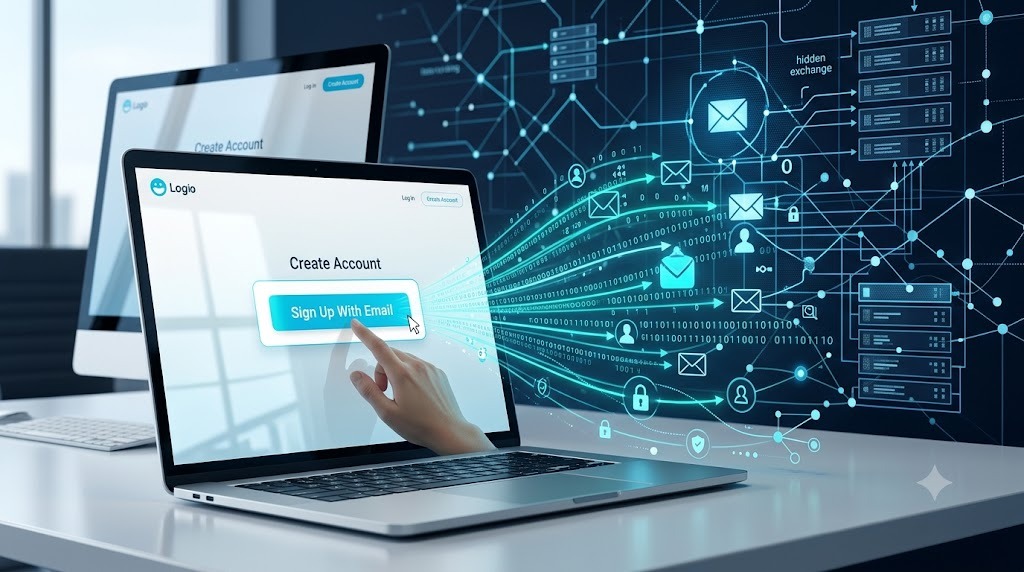
So you type it in, click "Sign Up With Email," and move on with your day.
What many people don't realize is that this small action often marks the beginning of a much larger exchange. You receive access to a service, but the company receives something valuable too: a direct line to you, a piece of your digital identity, and often the first building block of a much larger data profile.
In today's digital world, email addresses have become far more than communication tools. They are identifiers, tracking points, marketing assets, and in many cases, the key that connects your online activities across multiple platforms.
The privacy cost of clicking "Sign Up With Email" isn't always obvious. Sometimes it's minimal. Other times, it's surprisingly significant.
Let's explore what really happens after you hit that button.
Your Email Address Is More Valuable Than You Think
Most people view their email address as a basic contact method. Companies often see it differently.
An email address is one of the most stable pieces of personal information a person owns. Phone numbers change. Social media accounts come and go. Usernames are abandoned. But many people keep the same primary email address for years or even decades.
That makes it incredibly useful for businesses.
When you sign up for a website, your email can become the foundation of a customer profile. Over time, companies may connect your email to purchase history, browsing behavior, preferences, demographics, and interactions with their products or services.
Even if a website only asks for an email initially, additional information can accumulate over time. Every click, download, purchase, and login helps build a clearer picture of who you are.
From a marketing perspective, that's extremely valuable.
From a privacy perspective, it's worth understanding.
The Hidden Data Exchange Behind Free Services
There's an old saying on the internet: if a product is free, you might be part of the product.
While that statement is sometimes oversimplified, it highlights an important reality.
Many websites offer free content, tools, newsletters, or services in exchange for your email address because that information has business value.
Once you subscribe, several things may happen:
- You begin receiving marketing emails.
- Your engagement is tracked.
- Your interests are categorized.
- Your data may be analyzed for marketing purposes.
- Your profile may be enriched with additional information over time.
Not every company uses data aggressively. Many organizations handle customer information responsibly and transparently.
However, users often underestimate how much information can be inferred from seemingly simple interactions.
For example, clicking links inside emails can reveal what topics interest you. Opening messages can help marketers understand engagement patterns. Purchases can indicate spending habits. Even inactivity can become a data point.
Individually, these details may seem insignificant. Together, they create surprisingly detailed consumer profiles.
Email Addresses Can Connect Your Digital Identity
One reason privacy experts pay close attention to email addresses is their role as digital connectors.
Think about how many services you've joined over the years.
Streaming platforms. Shopping websites. Online courses. Newsletters. Forums. Mobile apps. Productivity tools.
Now imagine using the same email address for all of them.
That single address becomes a common thread linking dozens, perhaps hundreds, of online interactions.
While companies generally cannot access each other's private customer databases, data partnerships, advertising ecosystems, analytics platforms, and third-party services can sometimes create broader connections than users expect.
In the event of a data breach, an exposed email address may also become a starting point for attackers looking to gather additional information.
This doesn't mean people should stop using email altogether. That's unrealistic.
It simply means that an email address often carries more identifying power than most users realize.
Why Spam Is Only Part of the Privacy Problem
When people think about sharing their email address, spam is usually the first concern.
And that's understandable.
Nobody enjoys waking up to dozens of promotional messages advertising products they never intended to buy.
But spam is actually one of the more visible privacy consequences.
The less visible issues can be more important.
For example, companies may use your email to:
- Build audience segments
- Personalize advertising
- Measure campaign performance
- Analyze consumer behavior
- Retarget users across platforms
- Predict future purchasing interests
Much of this activity is legal and disclosed within privacy policies. The challenge is that privacy policies are often long, complex, and rarely read in full.
As a result, many users consent to data practices they don't fully understand.
The real privacy cost isn't necessarily receiving extra emails. It's losing visibility into how your information is collected, stored, analyzed, and shared over time.
Data Breaches Change the Equation
Another factor worth considering is security.
Every time you provide your email address to a new website, you're placing a degree of trust in that organization's security practices.
Most businesses take cybersecurity seriously. Unfortunately, no system is completely immune to breaches.
Over the past decade, numerous companies—large and small—have experienced security incidents exposing customer information.
When a database is compromised, email addresses are often among the first pieces of information leaked.
That can lead to:
- Increased spam
- Phishing attempts
- Credential-stuffing attacks
- Social engineering scams
- Identity-related risks
The more websites that store your email address, the larger your potential exposure becomes.
This doesn't mean you should avoid online services altogether. It simply highlights the importance of being selective about where and when you share personal information.
The Rise of Privacy-Conscious Signups
As awareness of digital privacy grows, many users are becoming more intentional about managing their online identities.
Instead of using one email address everywhere, some people create separate accounts for different purposes.
For example:
- A primary email for personal communication
- A work email for professional use
- A shopping email for retailers
- A newsletter email for subscriptions
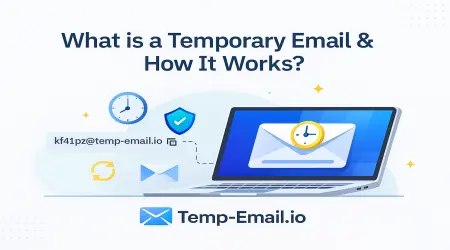
- Temporary emails for one-time registrations
This approach limits the amount of information tied to a single address and reduces the impact if one account becomes compromised.
Privacy-conscious users are not necessarily trying to hide. They're simply trying to maintain greater control over their personal information.
In many ways, it's similar to organizing financial accounts. Most people wouldn't use a single bank account for every aspect of their lives. The same logic can apply to email management.
Not Every Signup Is a Privacy Risk
It's important to keep the discussion balanced.
Sharing an email address isn't automatically dangerous.
Many websites provide genuine value. Newsletters can be informative. Online services can save time. Educational platforms can offer valuable learning opportunities.
The goal isn't to avoid every signup form you encounter.
The goal is to make informed decisions.
Before entering your email address, it can be helpful to ask a few simple questions:
- Do I trust this website?
- Is the value I'm receiving worth sharing my information?
- Does the company have a clear privacy policy?
- Will I likely use this service again?
- Am I comfortable receiving future communications?
These questions take only a few seconds to consider, but they can help reduce unnecessary data exposure over time.
Finding the Right Balance Between Convenience and Privacy
Convenience often wins online.
Typing an email address takes seconds. Reading privacy policies takes much longer. Most people naturally choose the easier option.
There's nothing wrong with that. Technology is supposed to make life easier.
However, convenience and privacy exist on a spectrum rather than being opposites. The smartest approach is usually finding a balance between the two.
Some signups are worth it. Others may not be.
Some companies handle customer data responsibly. Others may collect more information than necessary.
The key is developing awareness. Once you understand the value of your email address and the role it plays in the digital economy, you can make more intentional choices about where you share it.
Final Thoughts
Clicking "Sign Up With Email" feels like a small action because it is a small action—at least on the surface.
Behind that simple click, however, lies a larger exchange of value. You gain access, convenience, content, or services. In return, companies gain a way to identify, communicate with, and potentially learn more about you over time.
That doesn't make email signups inherently bad. They are an essential part of how the modern internet works.
But awareness matters.
Understanding the privacy implications of sharing your email address helps you make smarter decisions about when to sign up, what information to share, and how much access you're willing to grant.
The next time a website asks for your email address, you don't need to panic or refuse. Just pause long enough to recognize what you're trading—and decide whether the exchange is worth it.
Because in today's digital world, your inbox is more than a communication tool. It's a piece of your identity.