What Happens to Messages Sent to a Temporary Email After It Expires?
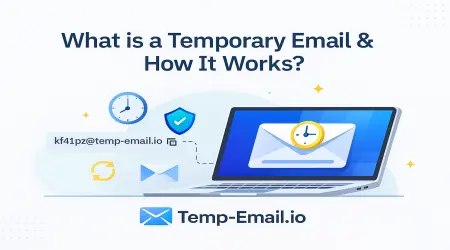
Temporary email services have become a popular tool for internet users who want a quick, disposable inbox without exposing their personal email address. Whether it's signing up for a free trial, downloading a resource, testing a new app, or accessing content behind a registration wall, temporary emails offer a simple solution. They help reduce spam, protect privacy, and keep your primary inbox from becoming overwhelmed with messages you never wanted in the first place.
But while most people understand the basic idea of a temporary email, there is one question that often comes up after using one: What happens to messages sent to a temporary email after it expires?
At first glance, the answer seems obvious. The email expires, so the messages disappear. However, the reality is a little more interesting than that. The way temporary email systems handle expired addresses depends on how these services are designed, what their purpose is, and how they manage data behind the scenes.
Understanding what happens after expiration can help users make better decisions about when temporary emails are appropriate and when a permanent email address is the safer option. It can also prevent common mistakes that many first-time users make when relying on disposable inboxes for things they were never designed to handle.
Why Temporary Emails Are Designed to Expire
To understand what happens after expiration, it helps to first understand why temporary emails expire at all.
Traditional email accounts are built for long-term communication. You may use the same email address for years, receiving everything from work messages and shopping receipts to personal conversations and account notifications. The inbox becomes part of your digital identity.
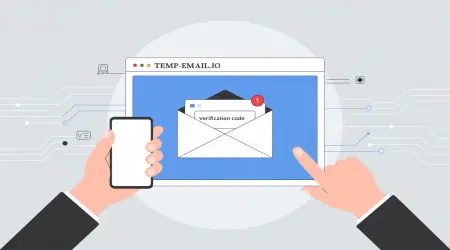
Temporary emails work differently. Their purpose is short-term access rather than long-term communication. They exist to help users receive a verification code, activation link, or confirmation message without creating a permanent relationship between their identity and a website.
Because these inboxes are intended for temporary use, keeping them active forever would defeat much of their purpose. Expiration helps reduce storage requirements, limits unnecessary data retention, and allows the service to continuously provide fresh addresses for new users.
In other words, the temporary nature of the inbox is not a limitation. It is the feature itself.
What Happens the Moment an Email Address Expires?
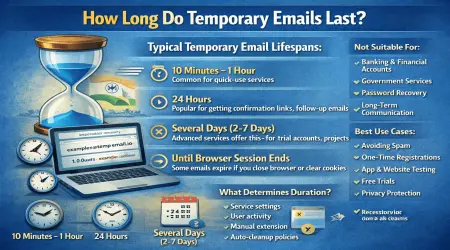
When a temporary email address reaches the end of its lifespan, the service typically removes access to that inbox. In most cases, users can no longer view messages that were previously received.
The exact process depends on the provider, but generally speaking, the inbox becomes inactive and the stored messages are deleted after a certain period.
Imagine using a temporary locker at a train station. While your rental period is active, you can access everything inside. Once the rental period ends, the locker is cleared and prepared for future use. Temporary email systems follow a similar concept.
The goal is to ensure that temporary inboxes remain temporary rather than turning into permanent storage systems.
For users, this means any important information stored only in that inbox may become inaccessible after expiration. That's why temporary emails are best suited for short-term verification rather than ongoing communication.
What Happens if Someone Sends a Message After Expiration?
This is where things become particularly interesting.
Suppose you used a temporary email address to register for a service. A few days later, after the inbox has expired, that website sends another email. What happens?
In most cases, the message never reaches an active inbox because the address no longer exists in a usable form. The sending server may receive a delivery failure notification, or the message may simply be rejected by the temporary email system.
From the sender's perspective, it's similar to sending a letter to an address that no longer exists. There is nowhere for the message to go.
This is one reason temporary emails should not be used for accounts that require future communication. Password resets, security alerts, billing notifications, and important updates could be lost if they are sent after the inbox has expired.
Are Expired Messages Stored Anywhere?
Many users assume that temporary email providers secretly keep copies of messages forever. While practices vary between services, the general purpose of temporary email platforms is to minimize long-term storage rather than expand it.
Most providers automatically delete messages after a specific time period. Some remove them when the inbox expires. Others retain them briefly before permanent deletion.
The exact retention policy depends on the service being used, which is why reviewing a provider's privacy policy is always a good idea if privacy is a major concern.
The key takeaway is that temporary email systems are generally designed around short-term access rather than long-term archiving. Unlike traditional email services, their value comes from limiting how long information remains available.
Why This Matters for Privacy
One of the biggest reasons people use temporary emails is privacy.
Every time you share your primary email address online, you create another connection between your identity and a website. Over time, those connections can accumulate into a significant digital footprint.
Temporary emails help reduce that footprint for one-time interactions. Because the inbox eventually expires, there is less ongoing communication associated with that address. There are fewer marketing emails, fewer promotional campaigns, and fewer long-term records tied to your primary inbox.
Of course, temporary emails are not a complete privacy solution. Websites may still collect other forms of information such as browser data, device details, or usage patterns. However, limiting unnecessary exposure of your personal email address remains a practical privacy habit.
Expiration is actually a major part of that privacy benefit. If inboxes remained active forever, they would gradually become permanent accounts and lose much of what makes them useful in the first place.
When You Should Not Use a Temporary Email
Understanding what happens after expiration also highlights situations where temporary emails are not appropriate.
For example, using a temporary email for banking services, healthcare platforms, business accounts, educational portals, or any service that may require future access is generally a bad idea.
Imagine needing to reset a password six months later only to discover that your registration email no longer exists. Recovering access could become difficult or even impossible.
Temporary emails work best when the interaction itself is temporary. If ongoing communication matters, a permanent email address is usually the safer choice.
A simple rule is this: if you expect to need the account in the future, use an email address you can still access in the future.
The Bigger Lesson Behind Expiring Emails
Perhaps the most interesting thing about temporary emails is what they reveal about modern internet behavior.
Many online interactions today are surprisingly short-lived. We sign up for websites we visit once, download resources we never use again, and create accounts that quickly become forgotten. Yet every registration often asks for a permanent email address.
Temporary emails challenge that assumption. They recognize that not every online interaction deserves a permanent place in your digital identity.
The fact that messages disappear after expiration reflects this philosophy. Some online activities are temporary, and the communication connected to them can be temporary as well.
In a digital world where information is often stored indefinitely, there is something surprisingly valuable about a system designed to let things disappear.
Final discussion
So, what happens to messages sent to a temporary email after it expires?
In most cases, previously received messages are deleted, the inbox becomes inaccessible, and future emails sent to that address can no longer be delivered. The exact process depends on the provider, but the overall goal remains the same: temporary access rather than permanent storage.
This expiration process is what makes temporary emails useful. It helps reduce inbox clutter, limits unnecessary data retention, and provides a practical way to separate short-term online interactions from your long-term digital identity.
However, it also comes with an important responsibility. Users should understand that temporary emails are not designed for ongoing communication. Once an inbox expires, access to its messages is usually gone as well.
Used correctly, temporary emails can be a valuable privacy tool. The key is knowing when temporary access is enough and when a permanent email address is the better choice.
After all, the strength of a temporary email isn't that it lasts forever. It's that it was never meant to.