Why Hackers Love Exposed Email Addresses
Exposed Email Addresses
Most people don't think twice about sharing their email address.
You enter it when creating a social media account. You use it for online shopping. You subscribe to newsletters, download free resources, join online communities, and sign up for mobile apps. Before long, your email address is scattered across dozens or even hundreds of websites.
It feels harmless because an email address seems like such a small piece of information.
After all, it's not your credit card number. It's not your bank account. It's not your home address.
But here's something many people don't realize: to cybercriminals, an email address can be incredibly valuable.
In fact, exposed email addresses are often the starting point for a wide range of online attacks. A hacker doesn't always need sensitive information right away. Sometimes all they need is a way to reach you, learn about you, or connect pieces of information together.
That's why email addresses frequently appear in data breaches, phishing campaigns, and cybercrime operations. They serve as digital identifiers that can unlock opportunities for scammers, fraudsters, and attackers.
The good news is that understanding why hackers value exposed email addresses can help you better protect yourself online. Once you recognize how these attacks work, you'll be in a much stronger position to reduce your risk.
Let's take a closer look at why exposed email addresses are so attractive to cybercriminals and what you can do about it.
Your Email Address Is Often the Key to Your Digital Identity
Think about how many online accounts are connected to your email address.
Your streaming services, shopping accounts, banking apps, social media profiles, work tools, and cloud storage platforms probably all rely on email as a primary method of identification.
In many cases, your email address acts as your username.
This makes email different from many other pieces of personal information. While a phone number might change and social media accounts come and go, people often keep the same email address for years.
To hackers, that consistency is valuable.
An exposed email address can serve as a starting point for building a profile about a person. Public information, social media accounts, leaked databases, and online activity may all become easier to connect once an email address is known.
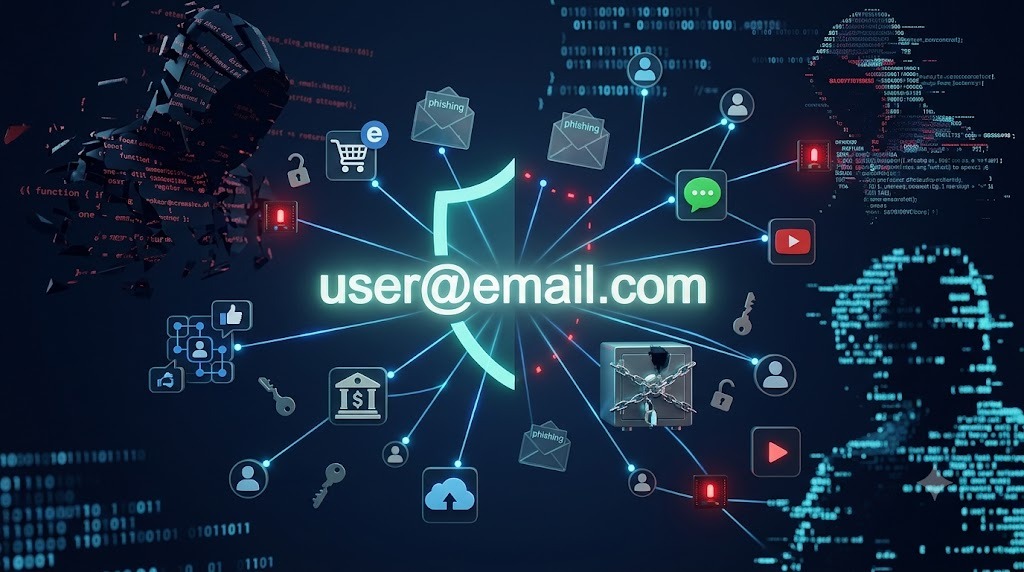
Imagine your email address as the central hub in a giant web of online accounts. The more services connected to it, the more useful it becomes to someone attempting to gather information.
Hackers understand this very well.
Exposed Emails Make Phishing Attacks Easier
One of the biggest reasons hackers want email addresses is simple: they need a way to contact potential victims.
Phishing attacks depend on communication.
A scammer sends an email pretending to be a trusted company, a bank, a delivery service, or even a coworker. The goal is to convince the recipient to click a malicious link, download a harmful attachment, or provide sensitive information.
Without an email address, that attack becomes much harder.
With an email address, attackers gain direct access to a target's inbox.
What makes modern phishing particularly dangerous is how personalized it can become.
Years ago, phishing emails were often obvious. They contained poor grammar, strange requests, and generic messages.
Today's attacks are often more sophisticated.
If attackers know your name, employer, interests, or recent online activity, they can create messages that appear surprisingly convincing. An exposed email address can become the first step toward gathering the information needed to launch these targeted attacks.
The more information connected to an email address, the more believable a phishing attempt can become.
Data Breaches Turn Email Addresses Into Valuable Assets
Whenever a company experiences a data breach, cybercriminals look for information they can use.
Email addresses are almost always among the most valuable pieces of data exposed.
Why?
Because email addresses remain useful long after a breach occurs.
Credit card numbers can be canceled. Passwords can be changed. But many people continue using the same email address for years.
As a result, attackers often collect large databases of exposed email addresses from multiple breaches and combine them into enormous lists.
These lists can be used for:
- Spam campaigns
- Phishing attacks
- Social engineering scams
- Credential-stuffing attacks
- Identity-related fraud attempts
Some cybercriminals even trade or sell collections of exposed email addresses because they have ongoing value.
To a hacker, a verified email address represents a potential target.
The more information attached to that address, the more valuable it becomes.
Email Addresses Help Attackers Test Stolen Passwords
Many people reuse passwords across multiple websites.
Cybersecurity experts have warned against this practice for years, but it remains surprisingly common.
This creates an opportunity for attackers.
Imagine a small website suffers a breach. Attackers obtain thousands of email addresses and passwords. They then use automated tools to test those same credentials across popular services such as shopping platforms, social media sites, and productivity applications.
This technique is commonly known as credential stuffing.
The attack works because many users reuse the same login information in multiple places.
In this scenario, the exposed email address serves as the username.
Without the email address, the stolen password may be far less useful.
With it, attackers have both pieces of information needed to attempt account access elsewhere.
This is one reason why protecting email exposure is so important.
Your email address is often the first ingredient required for these automated attacks.
Hackers Use Email Addresses to Gather More Information
Cybercriminals don't always attack immediately.
Sometimes they spend time collecting information.
This process, often called reconnaissance, involves gathering details about a potential target before launching an attack.
An email address can help fuel this process.
For example, attackers may search for:
- Public social media profiles
- Forum accounts
- Professional networking profiles
- Business websites
- Public records
- Past data breach information
Each source may reveal additional details.
Perhaps the email address appears on a company website. Maybe it is connected to a public social media profile. Perhaps it has appeared in previous breaches containing names, locations, or phone numbers.
Individually, these pieces of information may seem insignificant.
Together, they can help attackers build surprisingly detailed profiles.
The more information available, the easier it becomes to create convincing scams or impersonation attempts.
Why Spam Is More Than Just an Annoyance
Most people associate exposed email addresses with spam.
And while spam can certainly be frustrating, it often represents a larger problem.
Spam is frequently used as a testing mechanism.
Attackers send large volumes of emails to determine which addresses are active. When messages are opened, clicked, or responded to, attackers gain valuable information about potential targets.
An active email address is far more useful than an abandoned one.
This is why users sometimes notice an increase in phishing attempts after their email address appears in a breach or begins circulating widely online.
What starts as spam can evolve into more targeted attacks over time.
The inbox becomes a direct communication channel between attackers and potential victims.
From a cybersecurity perspective, reducing unnecessary exposure helps limit those opportunities.
How to Reduce the Risks of Email Exposure
Completely hiding your email address from the internet is unrealistic.
Most people need email for work, shopping, communication, and online services.
The goal isn't elimination.
The goal is risk reduction.
A few practical habits can significantly improve your privacy and security:
Use Separate Emails for Different Purposes
Consider maintaining different email addresses for important accounts, shopping, newsletters, and online registrations.
This limits the impact if one address becomes exposed.
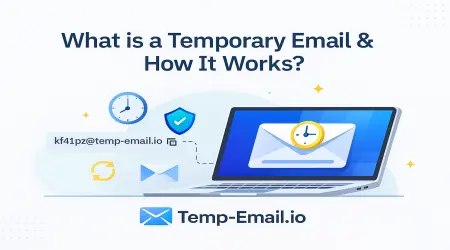
Use Temporary Emails for Low-Risk Signups
For one-time downloads, free resources, or short-term registrations, temporary email addresses can reduce unnecessary exposure of your primary inbox.
Enable Two-Factor Authentication
Even if attackers know your email address and password, two-factor authentication adds an additional layer of protection.
Use Unique Passwords
Avoid reusing passwords across multiple accounts.
Password managers can help generate and store unique credentials securely.
Be Skeptical of Unexpected Emails
Always verify requests involving passwords, financial information, account access, or personal data.
Legitimate organizations rarely ask for sensitive information through unsolicited emails.
The Real Value of Protecting Your Email Address
One of the biggest misconceptions about cybersecurity is that hackers only care about highly sensitive information.
In reality, attacks often begin with ordinary pieces of data.
An email address may seem harmless on its own, but it can become a gateway to much larger opportunities for cybercriminals.
It provides a way to contact you, identify you, research you, and potentially connect your activities across multiple platforms.
This doesn't mean you should fear using email.
It simply means you should recognize its value.
The more carefully you manage your email exposure, the harder it becomes for attackers to use it against you.
Small privacy habits can make a meaningful difference over time.
Conclusion
Hackers love exposed email addresses because they offer access, opportunity, and information. What appears to be a simple contact detail can become a powerful tool for phishing attacks, credential stuffing, reconnaissance, spam campaigns, and identity-related scams.
Email addresses are often the foundation of modern digital identities. They connect online accounts, enable password recovery, and serve as long-term identifiers across countless platforms. For cybercriminals, that makes them incredibly useful.
Fortunately, understanding the risks is the first step toward reducing them. By limiting unnecessary exposure, using temporary emails when appropriate, maintaining strong security practices, and treating your email address as valuable information, you can significantly improve your online safety.
In today's connected world, protecting your email address isn't just about avoiding spam. It's about protecting a key part of your digital identity.
Have you ever discovered your email address in a data breach or experienced an increase in spam after signing up for a website? Share your experience in the comments and join the conversation.