Why Spam Emails Are Increasing (And What You Can Do About It)
Spam emails are no longer just annoying promotions—they’ve become a serious digital safety issue. From phishing scams to fake invoices and malicious links, spam emails are increasing rapidly and affecting users worldwide.
The Global Rise of Spam Emails
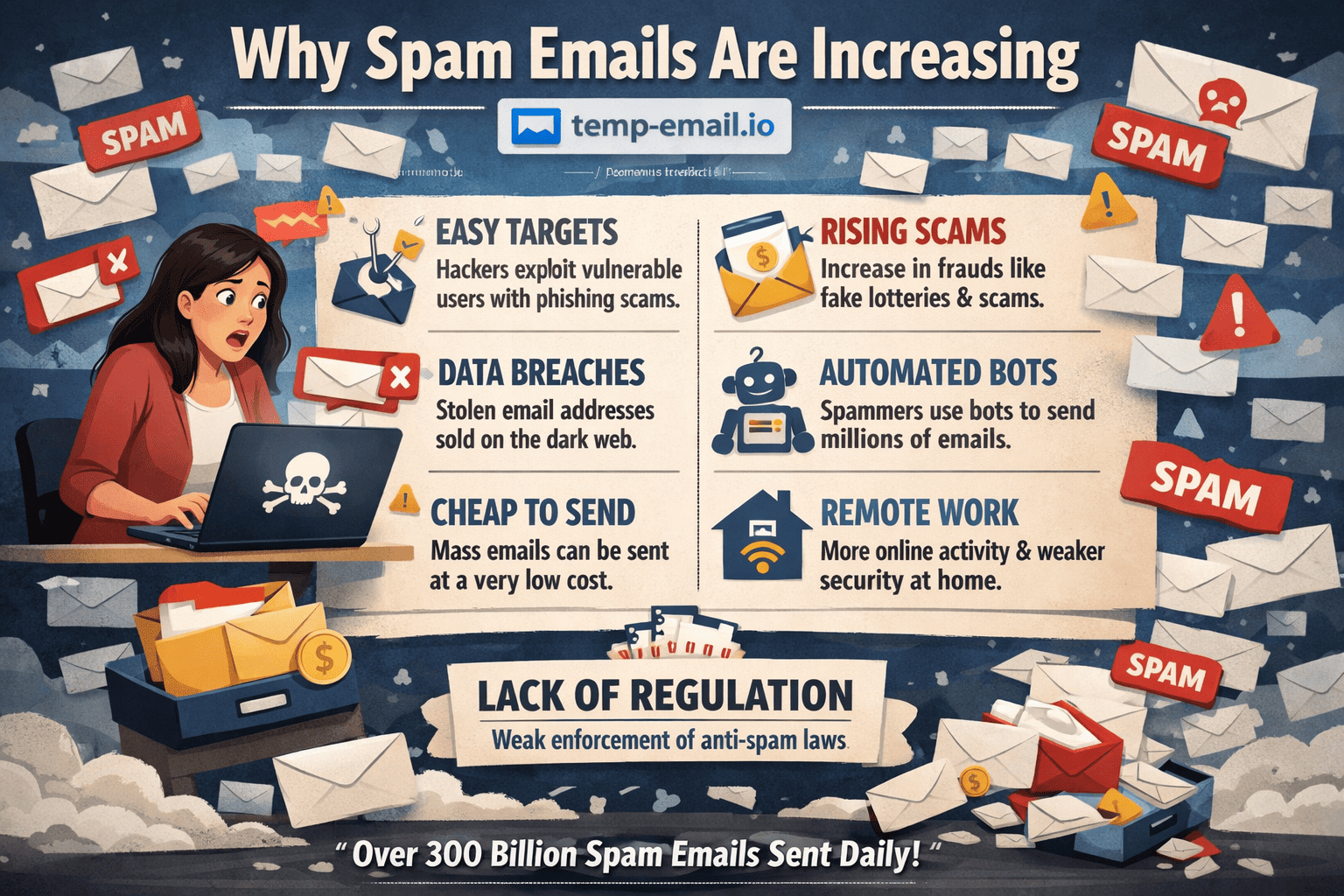
Email remains one of the cheapest and most effective channels for attackers and marketers. As a result, spam volume continues to grow every year.
Key reasons include:
Billions of active email users
Low cost of mass email campaigns
Weak data protection on many websites
Increasing online signups
👉 Start with the basics in Email Privacy Tips Everyone Should Know on temp-email.io.
Reason 1: Massive Data Breaches
One of the biggest drivers of spam is data breaches.
When websites are hacked:
Email databases are leaked
Addresses are sold on dark markets
Users are targeted repeatedly
Once your real email is exposed, spam can continue for years.
👉 Learn how to reduce breach impact in How Temporary Email Prevents Identity Theft on temp-email.io.
Reason 2: Email Address Reselling by Marketers
Many companies quietly sell or share email lists.
This happens when:
Users agree to unclear privacy policies
Free downloads require email signups
Data brokers trade user information
Your email may pass through dozens of marketers without your knowledge.
👉 Reduce exposure with Why You Should Use Disposable Email on temp-email.io.
Reason 3: More Online Signups Than Ever
Modern websites require email registration for almost everything:
Free trials
Newsletters
Downloads
Community access
Each signup increases the chance of spam.
👉 Learn safer signup habits in Temporary Email for Beginners: Complete Guide on temp-email.io.
Reason 4: Rise in Phishing & Scam Campaigns
Spam emails are no longer just ads—they’re often dangerous.
Common spam-based threats include:
Fake login alerts
Delivery scams
Payment request fraud
Malware links
These emails are designed to trick users quickly.
👉 Learn how to stay protected in Phishing Risks and How Temporary Email Helps on temp-email.io.
Reason 5: Weak Spam Filters Can’t Keep Up
While email providers improve filters, spammers adapt faster.
Problems include:
New sender domains every day
AI-generated spam messages
Personalized scam emails
This makes total spam prevention difficult.
👉 Learn how inbox separation helps in How Disposable Emails Reduce Spam on temp-email.io.
Reason 6: Email Tracking & Profiling
Email addresses are used to build detailed user profiles.
Tracking happens through:
Newsletter pixels
Signup forms
Cross-site data matching
Once profiled, users receive targeted spam campaigns.
👉 Learn how to limit tracking in Privacy-Focused Internet Habits in 2025 on temp-email.io.
Reason 7: Reusing the Same Email Everywhere
Using one email address for everything increases risk.
Common issues:
One leak exposes all accounts
Spam multiplies across platforms
Phishing becomes more convincing
Separating email usage is now essential.
👉 Compare safer options in Temporary Email vs Email Aliases on temp-email.io.
How Temporary Email Helps Reduce Spam
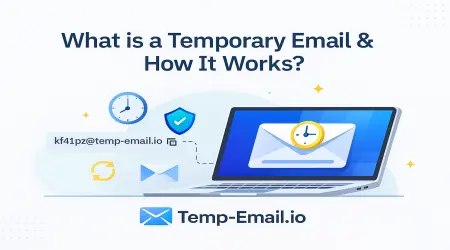
Temporary email is one of the most effective tools against spam.
It helps by:
Keeping your real email private
Isolating spam in short-lived inboxes
Eliminating long-term exposure
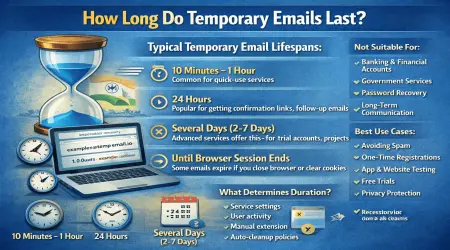
With temp-email.io, disposable inboxes expire automatically—taking spam with them.
👉 Learn how to use it responsibly in Responsible Use of Disposable Email Addresses on temp-email.io.
When Spam Is Your Own Fault (Common Mistakes)
Spam often increases due to:
Signing up on unknown websites
Ignoring privacy policies
Using real email for one-time access
👉 Avoid these errors in Common Mistakes When Using Temporary Emails on temp-email.io.
Building Better Anti-Spam Habits
To reduce spam long-term:
Use temporary email for low-trust sites
Keep your real email for trusted services
Avoid unnecessary newsletters
Practice email separation
👉 Learn boundaries in When You Should NOT Use Temporary Email on temp-email.io.
Why Spam Will Continue to Increase
Spam will keep growing because:
Email is still widely used
Attackers automate campaigns
Data collection is widespread
The solution isn’t just filters—it’s smarter privacy habits.
👉 Learn how tools fit the future in Future of Temporary Email Services on temp-email.io.
Final Thoughts: Spam Is a Privacy Problem
Spam emails are increasing because personal data is overshared and poorly protected. While you can’t stop spam globally, you can protect your own inbox.
Using privacy-first tools like temp-email.io helps you:
Reduce spam exposure
Avoid phishing attempts
Protect your digital identity
Spam isn’t just annoying—it’s a signal to take privacy seriously.